Introduction
Taking your dog along for a drive can be one of the best parts of pet ownership, but a loose dog in the back seat can quickly become a safety problem. Sudden braking, sharp turns, or a collision can send an unrestrained dog across the cabin while also distracting the driver. That is why choosing the best dog seat belts and crash-tested car hammocks for backseat safety requires more than looking for a product with the word “safety” on the package.
The most important distinction is between containment and crash protection. A hammock can keep a dog from falling into the footwell and protect your upholstery, but a hammock by itself is not a substitute for a crash-tested harness or secured crate. The American Kennel Club recommends using a crate or crash-tested dog seat belt and keeping dogs restrained while traveling.
For owners searching for the best dog seat belts and crash-tested car hammocks for backseat safety, the smartest approach is to evaluate the entire restraint system: independent testing, harness design, attachment method, proper fit, vehicle position, and how the product will actually be used.
Why Backseat Dog Safety Matters
Dogs do not have the same natural protection in a vehicle that humans have with three-point seat belts. A dog wandering freely around the cabin can be thrown forward during sudden deceleration or may move toward the driver at exactly the wrong moment.
A restraint also reduces the risk of escape after a crash. An injured or frightened dog may bolt through an open door or window, creating another danger in an already chaotic situation.
The back seat is generally preferable to the front passenger seat because of airbag deployment. The AKC specifically advises keeping dogs out of the front seat and recommends proper restraint during car travel.

This is where the best dog seat belts and crash-tested car hammocks for backseat safety become useful—but only when each component is used for the job it was designed to perform.
What Makes the Best Dog Seat Belts Different?
Not every product marketed as a dog seat belt is actually a crash-protection system. Some products are simply short tethers that clip into a vehicle seat-belt buckle. They may keep a dog from walking around the cabin, but that does not automatically mean they have been tested to withstand collision forces.
A genuine crash-tested dog restraint should have identifiable testing information. Look for the name of the testing organization, the model tested, the applicable protocol, and the size or weight range covered by the testing.
The Center for Pet Safety maintains a database of independently tested and certified pet travel products. Its certification program includes safety harnesses, travel carriers, and travel crates, with manufacturers required to meet independently developed safety and quality requirements.
That distinction matters because “crash-tested” can mean different things. A manufacturer may perform its own dynamic testing, while independent certification involves an outside organization evaluating the product. Those are not identical claims.
Harness design matters more than a simple tether
A walking harness is not necessarily a car safety harness. In a collision, the restraint needs to manage significant forces without concentrating them on a vulnerable area such as the dog’s neck.
A purpose-designed vehicle harness distributes restraint forces across stronger areas of the body, particularly the chest and torso. The connection between the harness and vehicle must also be compatible with the product’s tested configuration.
This is why simply attaching a leash or generic tether to a regular collar is not an appropriate crash-safety solution.
Independent certification is worth checking
The Center for Pet Safety’s certified product database provides one of the clearest ways for consumers to verify whether a particular pet restraint has undergone its certification process.
For example, Sleepypod’s Clickit line has appeared among independently tested harnesses, while other brands publish their own crash-testing information. When shopping, verify the exact model rather than assuming that every product from a particular brand has identical certification.
Dog Seat Belts vs. Crash-Tested Harnesses
The phrase “dog seat belt” is often used broadly, but there is an important difference between a seat-belt tether and a complete crash-tested harness system.
A tether is essentially the connection between the dog and the vehicle. The harness is the component that distributes forces across the dog’s body. A strong tether attached to a poorly designed walking harness does not automatically create a safe crash restraint.
For owners researching the best dog seat belts and crash-tested car hammocks for backseat safety, the better question is not simply, “Does this clip into my car?” Instead, ask, “What exact restraint system was tested, and how am I supposed to install it?”
Fit is equally important. A harness that is too loose can allow excessive movement, while one that is incorrectly positioned may place pressure in the wrong area. Follow the manufacturer’s sizing instructions and check the fit regularly, particularly if your dog gains or loses weight.
What About Crash-Tested Car Hammocks?
This is where shopping terminology can become confusing.
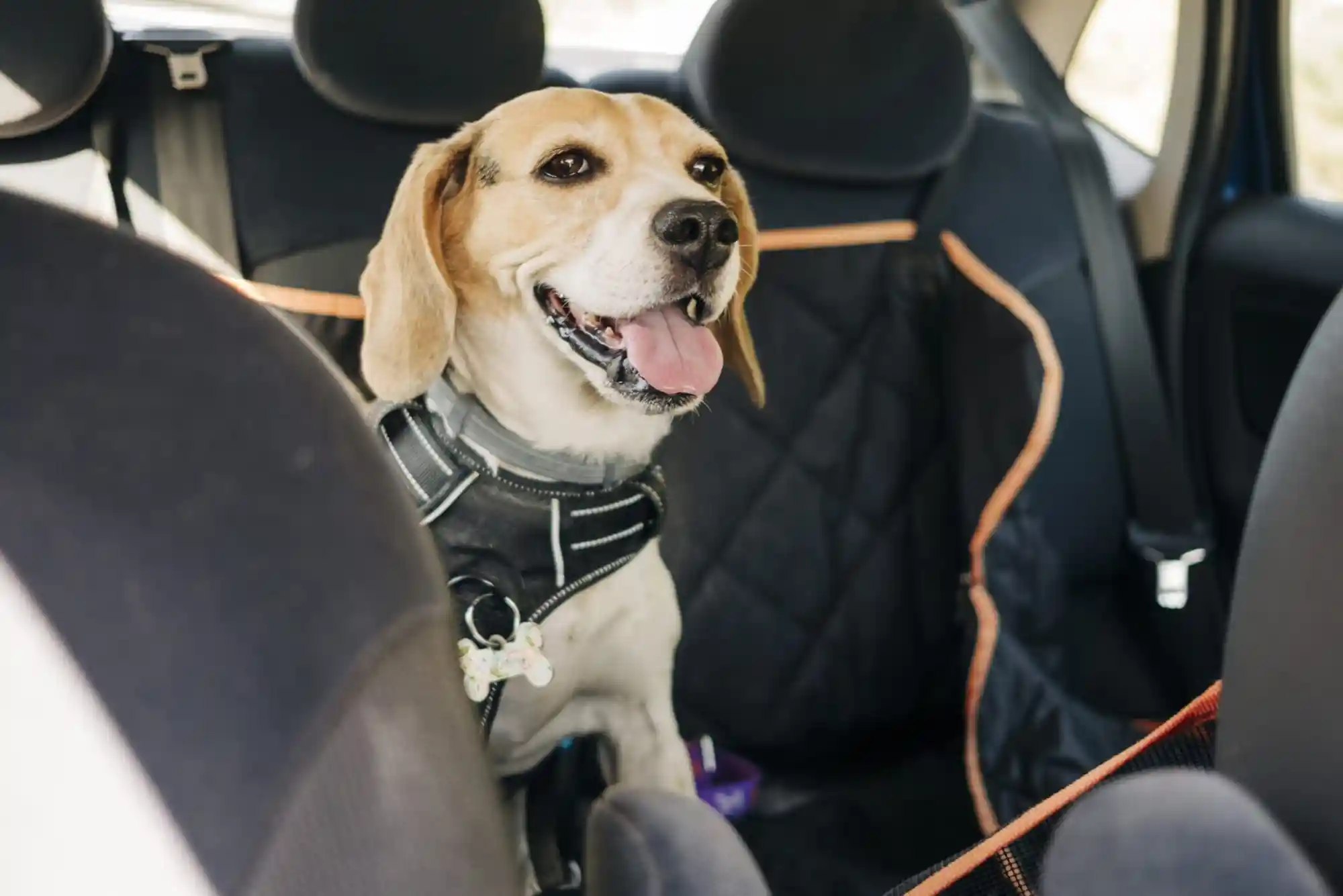
A dog car hammock is normally a fabric cover that attaches to the headrests of the front and rear seats. It creates a hammock-like surface across the back seat, helping prevent a dog from dropping into the footwell. It can also protect the upholstery from fur, dirt, muddy paws, and scratches.
However, a hammock’s ability to contain a dog during normal driving is different from its ability to protect the dog during a collision.
Current Center for Pet Safety certification information covers categories such as harnesses, carriers, and crates; a standard backseat hammock should not automatically be described as a crash-tested restraint.
That means anyone searching for crash-tested car hammocks should examine the product claim carefully. If the manufacturer says a hammock is “crash tested,” look for details about what was actually tested. Was the hammock itself tested dynamically? Was a dog restraint attached to it? Was the vehicle anchoring system evaluated? Is there independent certification?
Without those details, treat the hammock primarily as a comfort, containment, and seat-protection accessory, not as the primary crash restraint.
How a Hammock Can Still Improve Backseat Safety
That does not make a hammock useless. In fact, it can be a helpful part of a well-designed travel setup.
A properly installed hammock can prevent a dog from slipping between the seats, which may reduce distractions during ordinary driving. It also creates a more defined space for the dog and can make the back seat easier to keep clean.
The safest approach is to combine the hammock with an appropriate crash-tested restraint rather than expecting the hammock to absorb collision forces.
For example, a dog can ride on a backseat hammock while wearing a properly fitted crash-tested harness attached according to the harness manufacturer’s instructions. In that setup, the harness provides the restraint while the hammock provides a more comfortable and protected surface.
The two products perform different jobs.
Best Dog Seat Belts and Crash-Tested Car Hammocks for Backseat Safety: What to Look For
When comparing the best dog seat belts and crash-tested car hammocks for backseat safety, focus first on evidence rather than appearance.
Look for independently verified crash testing when possible. The Center for Pet Safety publishes certified products and testing information, making it possible to check whether a product’s certification claim is current.
Next, consider your dog’s size and body shape. A restraint designed for a small dog may not be suitable for a large, deep-chested breed. Weight ranges and size-specific testing should be taken seriously.
The vehicle also matters. A sedan, SUV, and pickup may require different restraint arrangements. The restraint should be attached only according to its instructions and intended configuration.
Finally, consider your dog’s behavior. A nervous dog may need gradual training before wearing a harness for a long journey. The AKC recommends introducing travel equipment gradually and starting with short drives so dogs can become comfortable with the car and restraint.
How to Use a Dog Car Restraint Correctly
Buying one of the best dog seat belts and crash-tested car hammocks for backseat safety is only the first step. Installation and everyday use matter just as much.
Keep your dog in the back seat rather than directly beside an active passenger airbag. Make sure the harness is correctly fitted and attached according to its instructions. Do not improvise attachment points or modify the restraint.
Avoid allowing your dog to hang its head through an open window. The AKC notes that flying debris can injure a dog’s eyes and ears, while an unsecured dog can potentially be ejected from the vehicle.
It is also sensible to introduce the restraint before a long road trip. Let your dog wear the harness indoors for short periods, then take brief drives. Gradually increase the journey length once your dog remains comfortable and calm.
For longer journeys, regular breaks allow your dog to stretch, drink water, and relieve itself. A familiar blanket or toy can also make the back seat feel less unfamiliar.
Common Mistakes to Avoid
One of the most common mistakes is assuming that any product that clips into a seat-belt buckle is crash tested. The attachment method alone does not prove the safety of the entire system.
Another mistake is using a regular walking harness without checking whether it was designed and tested for vehicle restraint. Walking equipment and crash restraints have different purposes.
Using a collar as the primary crash attachment is another poor choice. A collision can place concentrated forces around the neck, whereas properly designed vehicle harnesses are intended to distribute restraint forces more appropriately.
Finally, do not assume a hammock, barrier, or seat cover is a substitute for a crash-tested harness or secured crate. These products can help with containment and comfort, but they serve different functions.
Choose Verified Protection Over Marketing
Finding the best dog seat belts and crash-tested car hammocks for backseat safety is ultimately about understanding what each product is designed to do.
A crash-tested harness or secured crate should provide the primary restraint. A backseat hammock can then add comfort, reduce mess, and help define your dog’s space. But the hammock should not be confused with a crash-tested restraint unless the specific product has credible, independently verified testing to support that claim.
Before buying, check the exact model, weight range, attachment method, testing organization, and installation instructions. The Center for Pet Safety’s certification database is a useful starting point for verifying independent testing claims.
FAQs
Are dog seat belts safe?
Dog seat belts can improve safety when they are part of a properly designed restraint system. The strongest evidence comes from products with published crash-testing information or independent certification. A generic tether that simply clips into the vehicle buckle should not automatically be treated as a crash-tested restraint.
What is the safest way to travel with a dog in a car?
A properly secured, crash-tested crate or an independently tested dog harness is generally the type of equipment owners should look for. The dog should be restrained in the back seat and kept away from active airbags. The correct choice depends on the dog’s size, temperament, vehicle, and the specific product’s tested configuration.
Are dog car hammocks safe?
Dog car hammocks can be useful for keeping dogs on the backseat surface and protecting upholstery, but a hammock alone should not be considered a crash-tested restraint. Use it together with an appropriate crash-tested harness or other verified restraint system.
Can I use a regular harness with a dog seat belt?
A regular walking harness should not automatically be assumed to provide crash protection. For serious vehicle safety, choose a harness specifically designed for car restraint and check whether the exact model has published crash-testing or independent certification.
Should dogs ride in the front or back seat?
The back seat is generally the safer location because it keeps dogs farther from front airbags. The AKC specifically recommends keeping dogs restrained and out of the front seat during travel.
Can a dog wear a seat belt without a harness?
A dog should not be restrained by a seat belt attachment connected to its collar. A purpose-designed vehicle harness is intended to distribute restraint forces over the dog’s body rather than concentrating them around the neck.