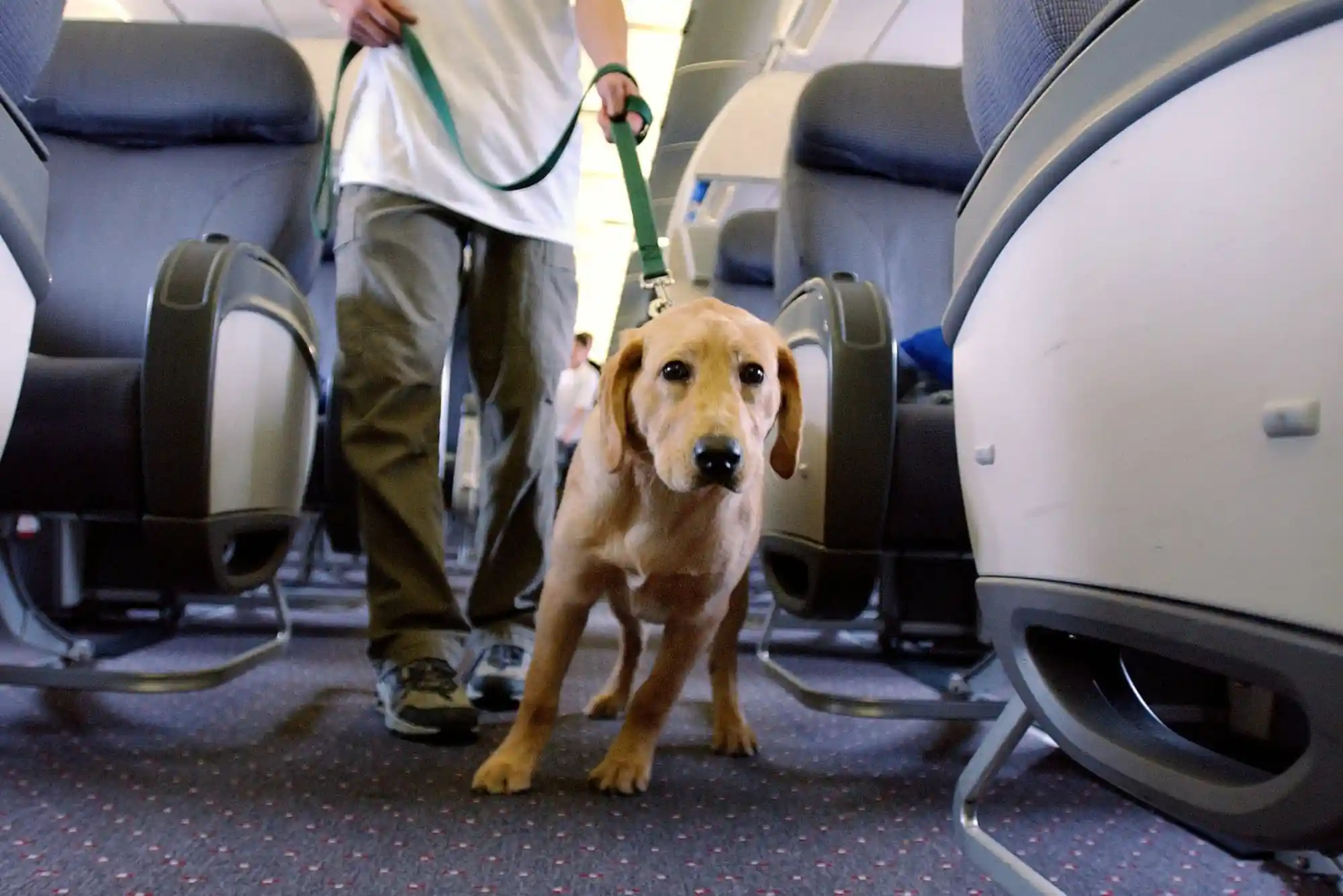
Introduction
Flying with a dog in the cabin can make travel much easier for both pets and owners. However, airline policies can vary significantly. Weight limits, carrier dimensions, documentation, fees, and destination rules may all affect your journey. Therefore, planning your trip well before departure is essential.
When researching Flying with a Dog in Cabin: Airline Weight Limits, Pet Crates, and Rules, travellers should first check the airline’s current pet policy. Some airlines allow small dogs under the seat. Others have restrictions based on routes, aircraft, or available cabin space. In addition, international destinations may require health certificates or vaccination records.
Understanding these requirements early can prevent unpleasant surprises at the airport. It also gives you enough time to choose an appropriate carrier and prepare your dog for the experience.
Flying with a Dog in Cabin: Airline Weight Limits, Pet Crates, and Rules
The most important thing to understand is that there is no single worldwide weight limit for dogs travelling in the cabin. Each airline establishes its own requirements. Some carriers focus on the combined weight of the pet and carrier. Others primarily require the animal to fit comfortably inside an approved carrier beneath the seat.
For this reason, never assume that a dog permitted by one airline will automatically be accepted by another. Airline rules can also change depending on the aircraft and destination.
Before purchasing a ticket, visit the airline’s official pet-travel page. Confirm the maximum carrier dimensions, acceptable carrier type, weight requirements, pet fee, and booking procedure.

It is also important to ask whether the airline permits pets on your specific flight. Some airlines limit the number of animals allowed in the cabin. Consequently, pet reservations may need to be made separately from your passenger ticket.
Understanding Airline Weight Limits
Weight is one of the most common concerns when travelling with a dog. However, airlines do not use identical standards. A small dog may qualify for cabin travel with one carrier but exceed another carrier’s restrictions.
The combined weight of the dog and carrier can be especially important. For example, if an airline has a combined limit, you must consider the carrier’s weight before determining whether your pet qualifies.
The carrier must also fit beneath the passenger seat. This requirement can be more restrictive than the actual weight limit. A dog that meets the weight requirement may still be refused if the carrier is too large.
Therefore, measure your dog and compare those measurements with the airline’s published requirements. Avoid relying only on general information found online.
Choosing the Right Pet Crate or Carrier
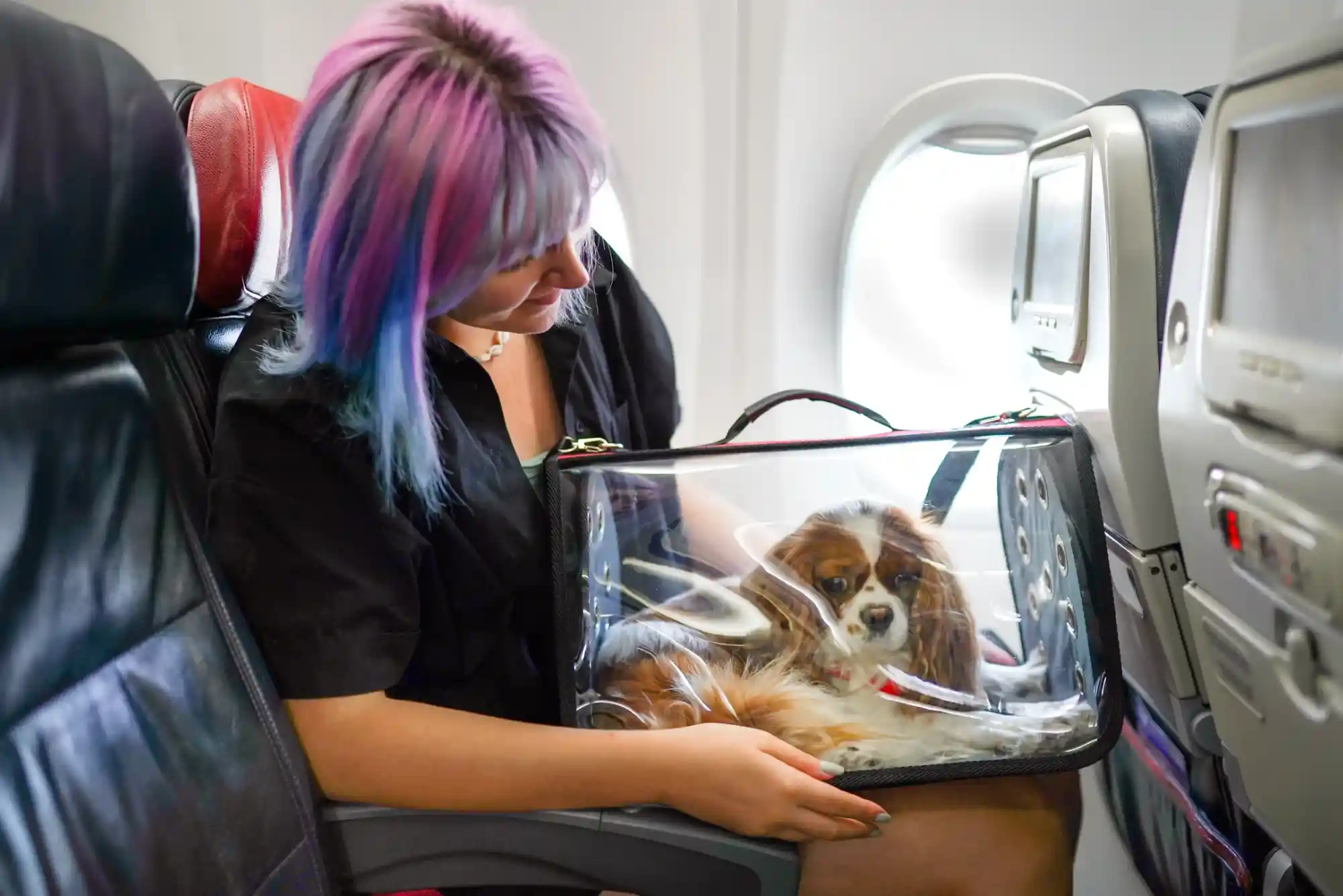
A suitable carrier is essential for Flying with a Dog in Cabin: Airline Weight Limits, Pet Crates, and Rules. Most airlines require a soft-sided or specifically approved carrier that can fit beneath the seat.
The carrier should provide adequate ventilation and secure closures. Your dog should have enough room to sit, turn around, and lie down comfortably according to the applicable airline requirements.
Avoid buying a carrier based only on appearance. Instead, check its dimensions against your airline’s exact under-seat measurements.
A lightweight carrier can also be useful because it reduces the combined travel weight. However, it should still be durable enough to protect your dog throughout the journey.
Before your flight, allow your dog to become familiar with the carrier. Place it inside your home and encourage your pet to enter voluntarily. Treats, toys, and familiar bedding can make the carrier feel less intimidating.
Prepare Your Dog Before the Flight
Air travel can be stressful for animals that are unfamiliar with carriers, crowds, and unfamiliar sounds. Preparation can make the experience considerably easier.
Start carrier training several weeks before departure. Allow your dog to spend increasing amounts of time inside the carrier. Short practice sessions can help build confidence.
You can also take your dog on brief car journeys while inside the carrier. This helps your pet associate travelling with normal experiences rather than something frightening.
On the day of travel, maintain your dog’s normal routine as much as possible. Avoid giving a large meal immediately before departure. Instead, follow your veterinarian’s advice regarding feeding and hydration.
Do not use sedatives unless specifically recommended by a veterinarian. Medication can affect an animal’s response to changes in pressure, temperature, and stress.
Documents and Health Requirements
Documents are another major consideration when Flying with a Dog in Cabin: Airline Weight Limits, Pet Crates, and Rules. Domestic flights may have different requirements from international journeys.
Depending on your route, you may need vaccination records, identification information, a health certificate, or import documentation. Some countries have additional requirements involving microchips, rabies vaccinations, parasite treatments, or quarantine.
International travellers should check destination requirements well before departure. Government rules can take time to complete, especially when specific veterinary certificates or treatments are required.
Travellers flying within or through the United States should also review official aviation and government guidance. Information relating to air travel and aviation safety is available through the FAA Pet Travel Regulations.
It is equally important to check the destination country’s official government website. Airline approval does not automatically mean your pet satisfies immigration or animal-entry requirements.
Booking a Flight With Your Dog
Booking early is strongly recommended when travelling with a dog. Airlines often place limits on the number of cabin pets allowed on each flight.
A passenger may therefore have a valid ticket but still be unable to bring a pet if the cabin pet allocation is already full.
When booking, tell the airline that you intend to travel with a dog. Confirm that the pet has been added to the reservation and ask about any required payment.
Keep your confirmation details accessible during your journey. Airport staff may need to verify your pet reservation before allowing you through check-in.
For additional travel planning information, resources about Flying With Pets can also help travellers understand the broader considerations involved in air travel with animals.
Airport Security and Check-In
Arrive at the airport early when travelling with a pet. Pet check-in procedures may take longer than standard passenger check-in.
At security, you may be asked to remove your dog from the carrier. The exact procedure can vary by airport and security authority.
Never put your dog directly onto a conveyor belt. Follow the instructions given by security personnel while keeping your pet secure.
A harness and leash can provide an additional layer of control. However, follow airport instructions carefully, especially when removing your dog from the carrier.
Keep important documents, food, waste bags, medication if applicable, and other essentials within easy reach.
During the Flight
Once onboard, the carrier will generally need to remain underneath the seat in front of you. Your dog should stay inside the carrier throughout the flight unless airline staff provide different instructions.
Do not place the carrier in an emergency exit row or another restricted seating location. Certain seats may also have limited space because of aircraft equipment.
Keep your dog calm by maintaining a quiet environment. Familiar bedding can provide reassurance. However, avoid overcrowding the carrier with toys or other items.
Water management is also important. A small, spill-resistant water container can help keep your pet hydrated. Follow airline instructions regarding when and how you can offer water.
Common Mistakes to Avoid
One common mistake is purchasing a ticket before confirming pet availability. Cabin pet spaces can be limited, so travellers should confirm the pet reservation first.
Another mistake is assuming that every soft carrier is airline approved. Dimensions matter, and airlines may enforce their requirements at check-in.
Travellers also sometimes overlook destination regulations. A dog may be accepted by the airline but denied entry because required documentation is missing.
Do not wait until the day before departure to check these requirements. Rules can involve veterinary appointments, vaccinations, certificates, or government approvals.
Finally, avoid choosing a carrier that is too small simply because it fits the airline’s dimensions. Your dog’s comfort should remain a priority.
What Should You Pack for Your Dog?
A well-prepared pet travel kit can make the journey much smoother. Bring your dog’s essential documents, leash, harness, waste bags, and familiar comfort items.
Pack a small amount of your dog’s usual food if the journey is long. A collapsible water bowl can also save space while travelling.
Absorbent pads may be useful inside the carrier. They can help manage accidents during unexpected delays.
You should also carry identification information. Your dog’s tag and microchip details should be current where applicable.
For broader travel tips, guides and destination information, Travelstump can provide additional travel-related resources.
Frequently Asked Questions
Can I take my dog on a plane in the cabin?
Many airlines allow small dogs in the cabin when they meet carrier and airline requirements. However, policies differ between airlines and routes. Always confirm the rules before booking.
What is the maximum weight for a dog in the cabin?
There is no universal cabin weight limit. Airlines establish their own requirements, and some consider the combined weight of the pet and carrier.
Does my dog have to stay in a carrier on the plane?
Generally, yes. Airlines usually require cabin pets to remain inside an approved carrier under the seat throughout the flight.
Can I take a dog carrier on an international flight?
Potentially, but international flights involve additional considerations. You must satisfy both airline requirements and the destination country’s animal-entry regulations.
Can I buy any pet carrier for flying?
No. Airlines can specify maximum dimensions, materials, ventilation requirements, and other conditions. Always check your airline’s current carrier policy.
Conclusion
Flying with a Dog in Cabin: Airline Weight Limits, Pet Crates, and Rules becomes much easier when you plan ahead. The key is to verify airline requirements before purchasing your ticket or carrier.