Introduction
The rules also changed in recent years. Under current U.S. Department of Transportation rules, emotional support animals are not considered service animals for air travel. Airlines may instead treat them under their pet policies. Psychiatric service dogs, however, can qualify as service animals when they are trained to perform disability-related tasks.
Understanding ESA and PSD Travel Rules
The most important part of How to Fly with an Emotional Support Animal (ESA) vs Psychiatric Service Dog (PSD) is understanding the difference between emotional support and task-based assistance.
An ESA can provide comfort, companionship, and emotional reassurance. Its presence may help a person manage anxiety, stress, loneliness, or other emotional difficulties. However, comfort alone does not make an animal a service animal under current federal air travel rules.
A psychiatric service dog has a different role. The dog must be individually trained to perform work or tasks that directly relate to a person’s disability. Examples can include interrupting harmful behaviors, responding to psychiatric episodes, retrieving medication, or performing other trained tasks.
The U.S. Department of Transportation recognizes psychiatric service dogs under the same general service-animal framework as other qualifying service dogs. Airlines therefore have different obligations toward PSDs than they have toward ESAs.
How to Fly With an Emotional Support Animal
When learning How to Fly with an Emotional Support Animal (ESA) vs Psychiatric Service Dog (PSD), travelers should first understand that an ESA generally travels under the airline’s pet policy.

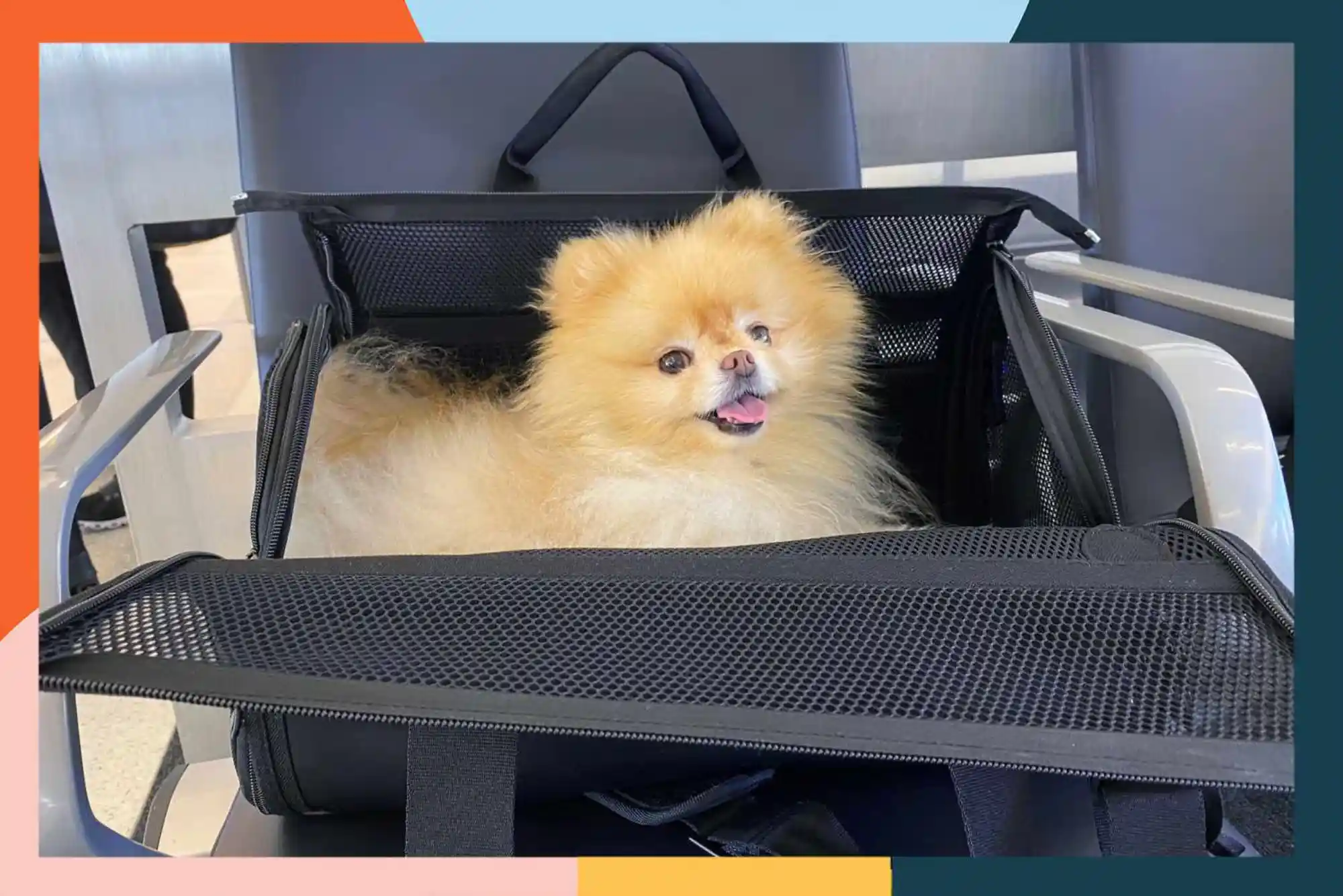
An airline may allow an ESA to travel in the cabin, but the airline can establish its own pet requirements. These requirements may involve an approved carrier, size restrictions, fees, route limitations, and advance reservations.
The exact rules can vary considerably between airlines. Therefore, travelers should check the airline’s current pet policy before purchasing a ticket or arriving at the airport. The U.S. Department of Transportation confirms that pet policies vary among airlines and that many carriers charge fees for pets traveling onboard.
An old emotional support animal letter does not automatically give an ESA free access to the aircraft cabin. This is an important point because older online information may describe rules that no longer apply.
Travelers should also avoid assuming that an ESA can occupy a passenger seat. If an airline permits the animal in the cabin, it will normally need to follow the carrier’s approved pet arrangements.
How to Fly With a Psychiatric Service Dog
Understanding How to Fly with an Emotional Support Animal (ESA) vs Psychiatric Service Dog (PSD) becomes especially important when the animal has been trained to perform psychiatric disability-related tasks.
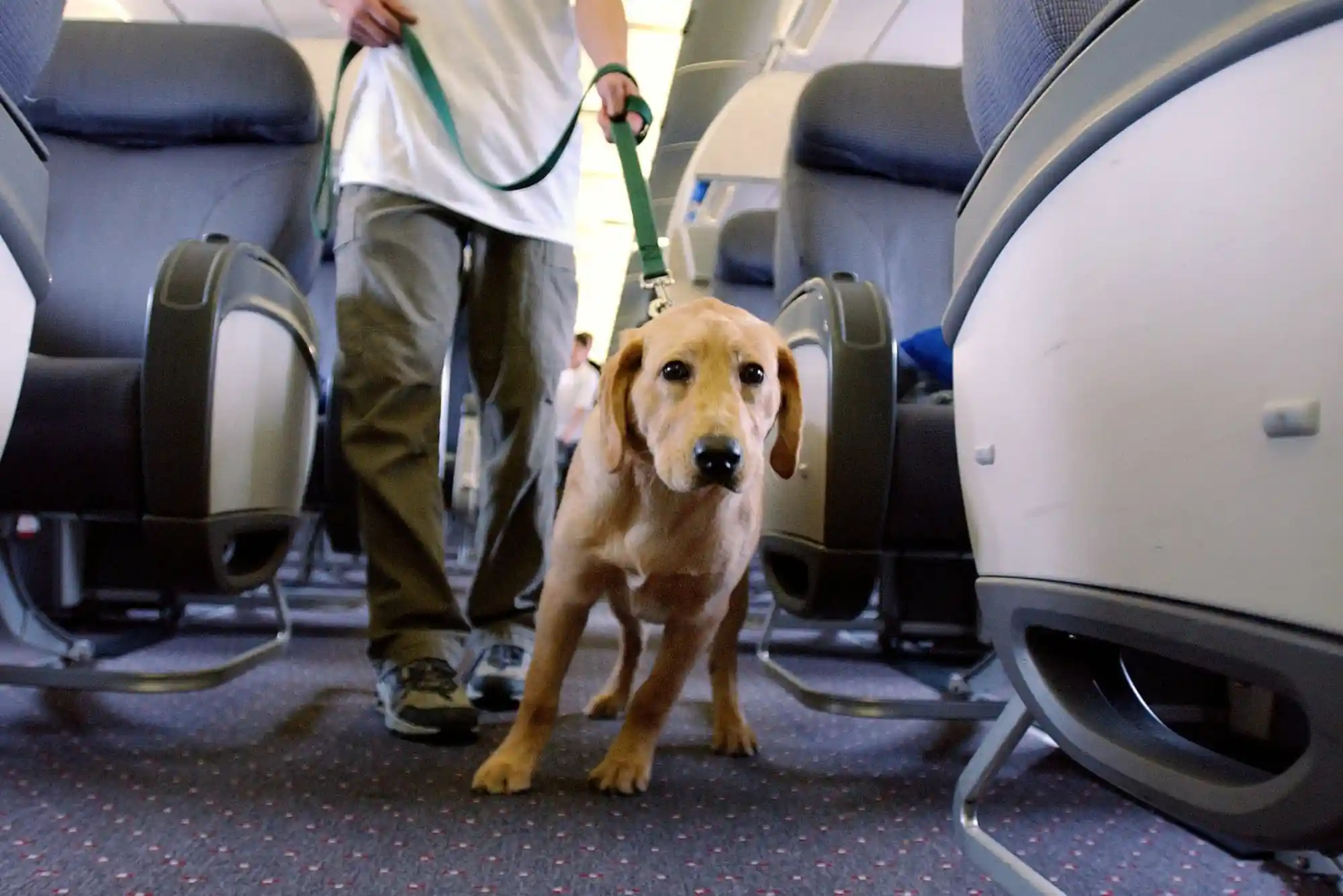
A qualifying psychiatric service dog is recognized as a service animal under the Air Carrier Access Act. Airlines generally must permit a service dog to accompany a qualified passenger in the aircraft cabin, subject to applicable safety, health, behavioral, and legal requirements.
The dog must be trained to perform work or tasks connected to the passenger’s disability. Simply providing comfort is not enough to establish service-animal status.
For example, a psychiatric service dog may be trained to recognize signs of a psychiatric episode and perform a specific response. The dog could also perform other trained actions that help the passenger manage disability-related limitations.
Airlines may ask limited questions to determine whether an animal qualifies as a service animal. They can ask whether the dog is required because of a disability and what work or task the dog has been trained to perform.
Documentation for a Psychiatric Service Dog
One major difference in How to Fly with an Emotional Support Animal (ESA) vs Psychiatric Service Dog (PSD) concerns airline documentation.
An airline may require a U.S. Department of Transportation Service Animal Air Transportation Form. This form addresses matters such as the dog’s health, behavior, training, and the passenger’s responsibility for the animal.
For flights lasting eight hours or more, an airline may also require a relief attestation. This addresses whether the dog can avoid relieving itself during the flight or can relieve itself in a sanitary manner.
Importantly, travelers do not submit the DOT form directly to the Department of Transportation. When an airline requires the form, it is submitted to the airline according to its process. The current DOT form can generally be required once for a trip rather than separately for every individual flight.
Airlines may require advance submission of these forms in certain circumstances. However, current DOT guidance also provides protections for passengers who purchase travel within 48 hours of departure.
Can an ESA Sit in the Cabin?
Many travelers asking How to Fly with an Emotional Support Animal (ESA) vs Psychiatric Service Dog (PSD) specifically want to know whether their animal can remain beside them during the flight.
The answer depends on the airline’s current pet policy. Since an ESA is not a service animal under current DOT air travel rules, the airline may handle the animal as a pet. The airline can therefore impose its own carrier, size, route, and fee requirements.
A passenger should never assume that an ESA automatically receives the same cabin privileges as a psychiatric service dog.
For a PSD, the situation is different. A qualifying service dog must generally be permitted to accompany its passenger in the cabin. The dog must fit safely within the available space and cannot block aisles, emergency exits, or other areas that must remain unobstructed.
Preparing Your Animal Before the Flight
Good preparation can make How to Fly with an Emotional Support Animal (ESA) vs Psychiatric Service Dog (PSD) much easier.
Start by reviewing the airline’s current animal policy well before departure. Do not rely on information from an old social media post or outdated travel article. Airline requirements can change, particularly for pets and international routes.
For an ESA, confirm whether the airline accepts pets in the cabin. Check carrier dimensions, fees, route restrictions, and reservation requirements.
For a PSD, review the airline’s service-animal process. Determine whether the DOT form is required and when it must be submitted.
Training and behavior are equally important. A service dog should remain under control throughout the airport and flight. Excessive barking, running around, jumping on passengers, or other disruptive behavior can create serious problems. DOT rules allow airlines to deny transportation to a service dog when it creates a significant disruption or presents a direct safety threat.
What Happens at the Airport?
Knowing How to Fly with an Emotional Support Animal (ESA) vs Psychiatric Service Dog (PSD) also means preparing for the airport experience.
Passengers traveling with an ESA should follow the airline’s pet procedures from check-in through boarding. The animal may need to remain inside its carrier in areas where the airline or airport requires it.
Passengers traveling with a PSD should keep the dog under control and have any required documentation readily accessible. It is also wise to locate animal relief facilities before boarding.
DOT guidance states that passengers can ask airport or airline personnel about nearby service-animal relief areas. Airlines must also provide certain assistance relating to service-animal relief areas when requested.
Arriving early can reduce stress. It gives passengers additional time to resolve documentation questions, complete check-in procedures, and settle their animals before boarding.
International Flights Require Extra Planning
International travel makes How to Fly with an Emotional Support Animal (ESA) vs Psychiatric Service Dog (PSD) more complicated.
A service dog accepted under U.S. rules may still need to meet the destination country’s animal-entry requirements. Countries can have their own vaccination, identification, quarantine, health certificate, import permit, and other requirements.
The U.S. Department of Transportation specifically warns travelers that foreign countries may impose their own requirements for accepting service animals.
This is especially important for travelers connecting through multiple countries. The rules of the transit country may also affect the animal’s entry or movement.
Therefore, international travelers should research destination and transit requirements well before departure. Waiting until the week of travel can create unnecessary complications.
Common Mistakes Travelers Should Avoid
One common mistake is assuming that an ESA and PSD have identical legal status. They do not.
Another mistake is believing that a doctor’s letter automatically makes an ESA a service animal. Under current DOT rules, emotional support animals are not service animals for purposes of federal air travel regulations.
A third mistake is confusing emotional support with trained psychiatric assistance. A PSD must perform trained work or tasks related to a disability.
Travelers should also avoid relying on outdated forms or policies. Current airline requirements should always be checked before departure.
Finally, passengers should not underestimate the importance of behavior. Regardless of classification, an animal should be prepared for crowded terminals, security procedures, unfamiliar sounds, aircraft noise, and long periods of waiting.
Frequently Asked Questions
Is an emotional support animal considered a service animal on a plane?
No. Under current U.S. DOT air travel rules, emotional support animals are not considered service animals. Airlines may transport them according to their pet policies.
Can a psychiatric service dog fly in the cabin?
Yes. A qualifying psychiatric service dog is recognized as a service animal under the Air Carrier Access Act. Airlines generally must allow the dog to accompany its passenger in the cabin, subject to applicable requirements.
Do psychiatric service dogs need documentation to fly?
An airline may require a DOT Service Animal Air Transportation Form. Additional documentation may apply for certain long flights or foreign destinations.
Can airlines charge a fee for a psychiatric service dog?
A qualifying service dog is not treated like an ordinary pet. Airlines cannot charge a pet fee for required service-animal accommodation under the ACAA. However, optional services may have separate charges.
Can an emotional support animal fly for free?
Not necessarily. Because airlines can treat ESAs as pets, applicable pet fees and requirements may apply. The specific policy depends on the airline.
What is the main difference between an ESA and a PSD?
An ESA primarily provides emotional comfort through its presence. A PSD is individually trained to perform specific tasks related to a person’s disability. This distinction determines their treatment under current U.S. air travel rules.
Conclusion
Understanding How to Fly with an Emotional Support Animal (ESA) vs Psychiatric Service Dog (PSD) can prevent confusion and make air travel more manageable. The key difference is the animal’s legal role. An ESA is generally treated as a pet under current U.S. airline rules, while a qualifying psychiatric service dog is recognized as a service animal.