Introduction
Flying with a cat or small dog can be much easier when your pet stays beside you in the cabin. However, choosing the right carrier is more complicated than simply buying a bag labeled “airline approved.” Airlines have different under-seat dimensions, pet policies, and aircraft configurations. A carrier that works on one flight may not be accepted on another.
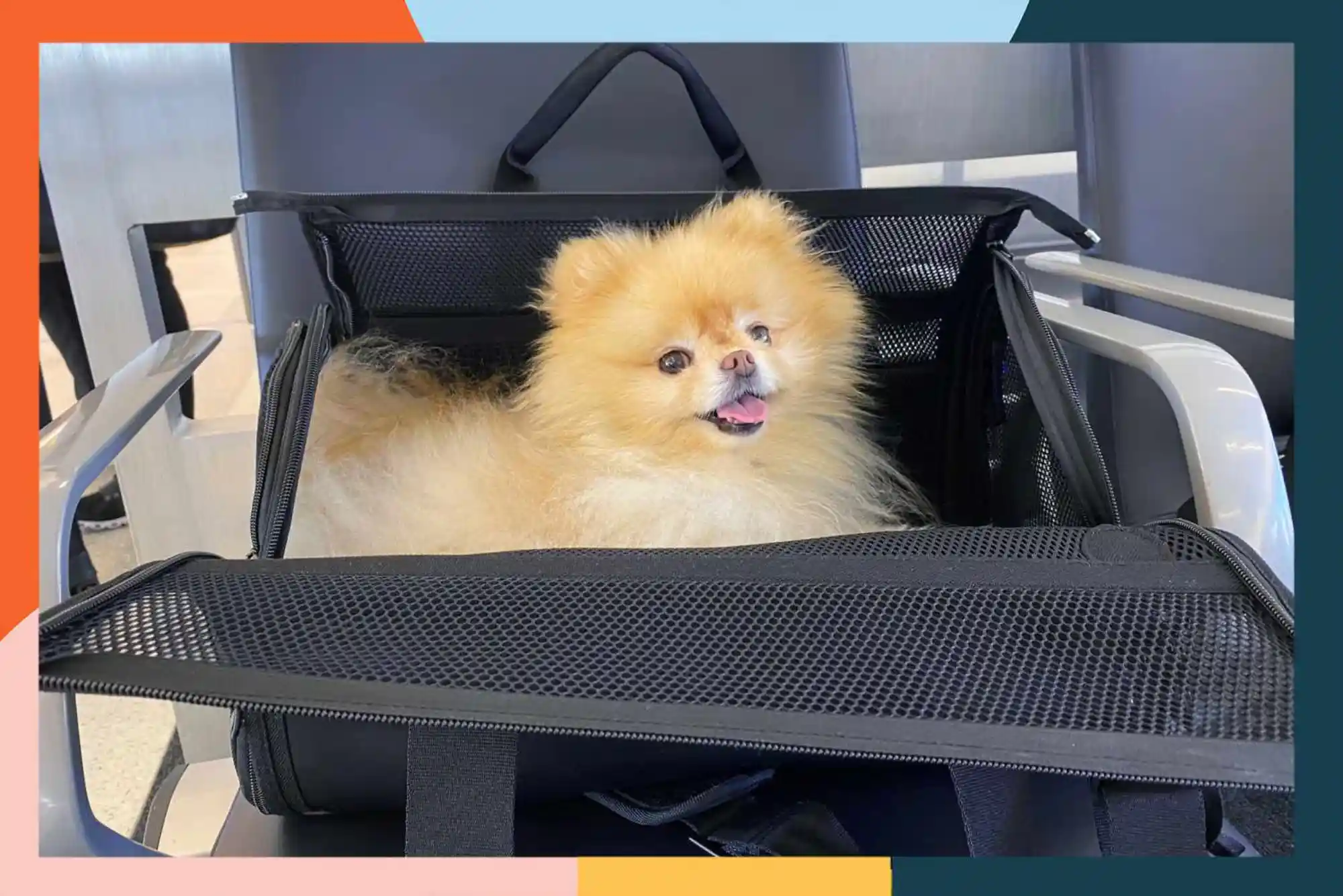
The best airline approved pet carriers for in-cabin flights are usually soft-sided, flexible, well-ventilated, secure, and designed to fit beneath the seat in front of you. The carrier must also give your pet enough space to remain comfortable during the journey.
The Federal Aviation Administration does not approve individual consumer pet carriers. Instead, airlines determine whether pets are permitted in the cabin and establish their own requirements. The FAA requires an accepted pet container to remain properly stowed under the seat and not obstruct the aisle.
That makes under-seat compatibility the most important factor when choosing an in-cabin carrier.
What Makes the Best Airline Approved Pet Carriers?
The best airline approved pet carriers balance airline compliance with your pet’s comfort. A carrier should not simply be small enough to fit under a seat. It should also provide adequate ventilation, secure closures, a stable base, and enough interior room for your pet to sit, turn, and lie down comfortably.
Soft-sided carriers are particularly useful because aircraft seat areas are not identical. The available space can change according to the aircraft, seat configuration, and cabin layout. A flexible carrier can sometimes compress slightly while remaining secure and ventilated.

American Airlines, for example, recommends soft-sided collapsible kennels for carry-on pets. Its published soft-sided maximum is 18 x 11 x 11 inches, although specific aircraft and seat restrictions can still apply.
This illustrates an important point: advertised carrier dimensions should be treated as a starting point rather than a guarantee.
Why Under-Seat Fit Matters So Much
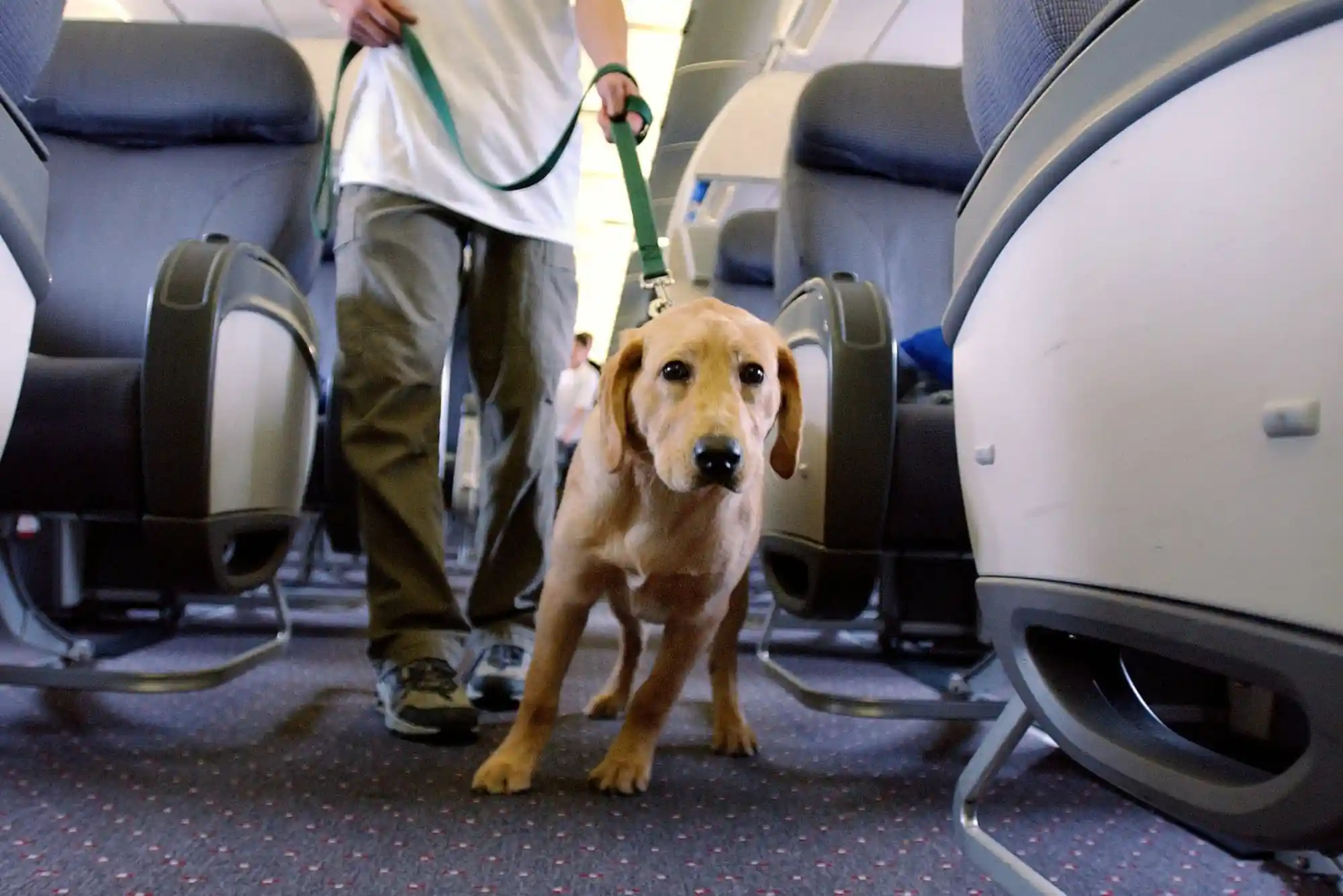
Under-seat fit is one of the biggest challenges of flying with a pet. Airlines generally require the carrier to remain completely under the seat during taxi, takeoff, and landing.
The FAA specifically states that an in-cabin pet container must be small enough to fit underneath the seat without blocking a person’s path to the main aisle. It must also remain properly stowed while the aircraft is moving on the airport surface and during takeoff and landing.
This is why soft-sided construction is so popular.
A rigid carrier may have excellent structural support, but its fixed dimensions can make it difficult to fit beneath an aircraft seat. A flexible carrier can conform more easily to irregular spaces.
However, flexibility should never mean collapsing the carrier so much that your pet loses ventilation or usable space.
Sleepypod Air: A Premium Choice for In-Cabin Travel
The Sleepypod Air is designed specifically around the challenges of air travel. Its dimensions range from 16 to 22 inches in length, with a width and height of 10.5 inches. The manufacturer recommends it for pets weighing up to 18 pounds.
One of its most useful features is its ability to compress for different under-seat configurations. The carrier also uses breathable mesh on four sides, which helps maintain airflow while your pet is inside.
The Sleepypod Air weighs around 4 to 4.5 pounds depending on the configuration. That is heavier than some basic soft carriers, but the additional structure and features are useful for frequent travelers.
It is particularly attractive for owners who drive to the airport because the carrier is designed with vehicle travel in mind as well as cabin travel.
Still, the carrier’s maximum dimensions should always be compared with your specific airline before departure. A flexible design does not override an airline’s rules.
Sherpa Original Deluxe: A Popular Soft-Sided Option
The Sherpa Original Deluxe is another well-known choice among travelers looking for airline approved pet carriers. Its soft construction and flexible frame make it suitable for under-seat travel.
The spring-wire design allows the carrier to compress without completely losing its shape. That can be helpful when the space beneath the aircraft seat is tighter than expected.
Another useful feature is the carrier’s ventilation through mesh panels. Good airflow is essential because your pet may spend several hours inside the carrier, including time at the airport before boarding.
Sherpa also operates its Guaranteed On Board program for qualifying purchases and participating airlines. However, this should not be interpreted as universal airline approval. Airline policies and aircraft restrictions still apply.
The carrier is best considered a flexible travel solution rather than a guarantee that every airline or aircraft will accept the same size.
SturdiBag: Flexible Height for Tight Spaces
The SturdiBag range is designed around one of the biggest problems with in-cabin pet travel: different under-seat dimensions.
Its patented flex-height design allows the carrier to adjust in height, making it easier to fit beneath varying aircraft seats. Sturdi Products states that its Medium and Large Cube models meet major airline specifications, while several SturdiBag sizes meet most airline requirements. The company also emphasizes that travelers should check their airline’s current rules before flying.
The SturdiBag Pro 2.0 is available in multiple sizes. The Small measures approximately 18 x 10 x 9.25 inches, while the Large measures about 18 x 11.5 x 11.5 inches.
This flexibility makes SturdiBag especially interesting for travelers who have connecting flights involving different aircraft.
The carrier also includes features such as mesh ventilation, an interior safety tether, washable fleece padding, and zipper security clips.
Mr. Peanut’s Gold Series: Under-Seat Focused Design
Mr. Peanut’s Gold Series is another option worth considering for travelers who prioritize under-seat compatibility.
The current Gold Series standard carrier is designed with an exterior size of approximately 18 x 11.5 x 11.5 inches and can flex down in height. The manufacturer recommends it for pets up to 25 pounds, although the pet’s actual body dimensions matter more than the weight number alone.
The carrier uses soft-sided construction, mesh ventilation, a reinforced base, and self-locking zippers. Those features can be particularly useful when traveling with a curious cat or small dog that tries to manipulate ordinary zippers.
Mr. Peanut’s also offers a smaller Gold Series Mini with closed dimensions of about 17 x 11 x 9 inches. Its lower profile can make it useful for flights with tighter under-seat space.
As with every carrier, though, the manufacturer’s “airline approved” description does not replace checking the operating airline’s current requirements.
How to Choose the Right Pet Carrier Size
Choosing the correct size is more complicated than matching your pet’s weight to a manufacturer’s maximum.
Start by measuring your pet while standing. Measure from the nose to the base of the tail for length. Then measure from the floor to the top of the head or ears for height.
Your pet should have enough usable space to change position and lie comfortably. At the same time, the carrier cannot simply be oversized for comfort because it must fit under the aircraft seat.
This creates a compromise.
A carrier that is too small can make the flight uncomfortable. A carrier that is too large may be refused at check-in or the gate.
The goal is to find the smallest carrier that comfortably accommodates your pet while staying within your airline’s published limits.
Soft-Sided vs. Hard-Sided Pet Carriers
For most in-cabin flights, soft-sided carriers are more practical because they can adapt to the space beneath the seat.
Hard-sided carriers offer more rigid protection, but their fixed height can create problems. If the carrier is only slightly taller than the available space, it cannot compress.
Soft-sided carriers also tend to be lighter, which matters because airlines may consider the combined weight of the pet and carrier.
That said, softness should not mean poor construction. Look for a stable bottom, secure seams, strong zippers, durable mesh, and enough structural support to prevent the carrier from folding inward onto your pet.
Ventilation Is More Important Than It Looks
A carrier can technically fit under the seat and still be unsuitable for comfortable travel if airflow is poor.
Mesh panels allow air circulation and give pets some visibility. This can be especially useful for cats that become nervous in enclosed spaces.
However, excessive compression can reduce ventilation. This is why simply forcing a tall carrier under the seat is not a good strategy.
The carrier should fit without being crushed around your pet.
A good design provides airflow while still allowing the bag to conform to the available space.
Check Your Airline Before Buying
One of the biggest mistakes travelers make is purchasing a carrier first and checking airline requirements later.
Airline policies can differ significantly. American Airlines, for example, publishes specific carrier dimensions and restrictions based on aircraft and cabin. It also prohibits carry-on pets from certain seats, including bulkhead and exit-row locations.
Alaska Airlines similarly requires pets traveling in the cabin to fit within an under-seat carrier and notes that pet space is subject to availability.
This means you should check the exact airline, aircraft, cabin, and seat before finalizing your carrier.
If your journey includes multiple airlines, check every operating carrier rather than relying on the rules of the airline where you purchased the ticket.
Prepare Your Pet Before the Flight
Even the best airline approved pet carriers cannot make an unprepared pet instantly comfortable.
Introduce the carrier at home several days or weeks before the journey. Leave it open in a familiar room and place bedding or treats inside. Allow your pet to enter voluntarily.
Short practice sessions can help your pet become comfortable with the carrier before the airport experience.
On travel day, avoid making the carrier feel like a sudden trap. Familiar bedding and a calm routine can make a noticeable difference.
The FAA also notes that airlines may have requirements concerning pet behavior, health documentation, and remaining inside the carrier throughout the flight.
What to Look for in an Airline Approved Pet Carrier
The ideal carrier should combine flexibility, ventilation, security, comfort, and manageable weight.
Pay particular attention to the base. A sagging bottom can make your pet uncomfortable and can also make the carrier harder to slide beneath a seat.
Zippers deserve attention too. A nervous cat or energetic puppy can sometimes exploit weak closures.
Ventilation should cover multiple sides, while the material should be durable enough to handle claws and repeated airport use.
Finally, check whether the carrier has a luggage sleeve or comfortable shoulder strap. These small features become surprisingly valuable when you’re walking through a busy airport with luggage in one hand and your pet in the other.
Are Airline Approved Pet Carriers Actually Guaranteed to Be Accepted?
No.
There is no universal carrier approval that guarantees acceptance on every airline.
The FAA leaves cabin-pet decisions to individual airlines, while each airline can establish additional rules.
This is why the phrase “airline approved” should be treated carefully when shopping.
A carrier may meet the requirements of several airlines but still exceed the dimensions permitted on a particular aircraft. Even a carrier with excellent reviews can encounter problems if the aircraft has limited under-seat storage.
The safest approach is to match the carrier’s actual dimensions against the airline’s current requirements before traveling.
Choosing the Right In-Cabin Carrier
The best airline approved pet carriers make air travel easier because they combine practical under-seat dimensions with comfort and security. Sleepypod Air stands out for its flexible design and ventilation, while Sherpa Original Deluxe offers a widely used soft-sided approach. SturdiBag is particularly useful when flexible height is important, and Mr. Peanut’s Gold Series focuses heavily on under-seat compatibility.
But there is one rule worth remembering: never buy a carrier based only on the words “airline approved.”
Check your airline’s current pet policy, confirm the aircraft-specific under-seat dimensions, measure your pet, and make sure the carrier provides adequate ventilation and room for comfortable positioning.
If you’re preparing for an upcoming flight, compare your airline’s requirements with the carrier dimensions before purchasing. A few minutes of preparation can save you a very stressful conversation at the airport.
FAQs
What size pet carrier will fit under an airline seat?
There is no universal size because airlines and aircraft have different under-seat configurations. Many soft-sided carriers are designed around dimensions near 18 x 11 x 11 inches, but travelers should always verify the exact maximum dimensions for their airline and aircraft. American Airlines, for example, lists 18 x 11 x 11 inches for soft-sided carry-on pet kennels.
What is the best airline-approved pet carrier?
There is no single carrier that is guaranteed to work for every airline. Sleepypod Air, Sherpa Original Deluxe, SturdiBag, and Mr. Peanut’s Gold Series are among the established soft-sided options designed for in-cabin travel. The right choice depends on your pet’s size and your airline’s specific under-seat requirements.
Can a pet carrier be too big for an airplane seat?
Yes. If the carrier cannot fit properly beneath the seat, the airline may refuse it for cabin travel. The FAA requires an accepted pet container to fit beneath the seat without obstructing access to the main aisle.
Are soft pet carriers better for flying?
Soft-sided carriers are often more practical for in-cabin flights because they can flex slightly around the under-seat area. However, they still need sufficient structure, ventilation, and security. A soft carrier should never be compressed so severely that it compromises your pet’s comfort or airflow.
Can a 20-pound dog fit under an airplane seat?
It depends on the dog’s body dimensions, the carrier, the airline, and the aircraft. Weight alone does not determine whether a dog can travel in the cabin. The pet and carrier must comply with the airline’s requirements, and the dog must fit comfortably inside the carrier.
Do airlines provide pet carriers?
Generally, travelers should expect to provide their own compliant carrier. The carrier must meet the operating airline’s specifications and be suitable for under-seat storage when cabin pet travel is permitted.
Can I use a regular pet carrier on a plane?
You can only use it if it meets the airline’s requirements for cabin pet carriers. A carrier designed for home or car use may be too large, too rigid, or otherwise unsuitable for under-seat storage.