
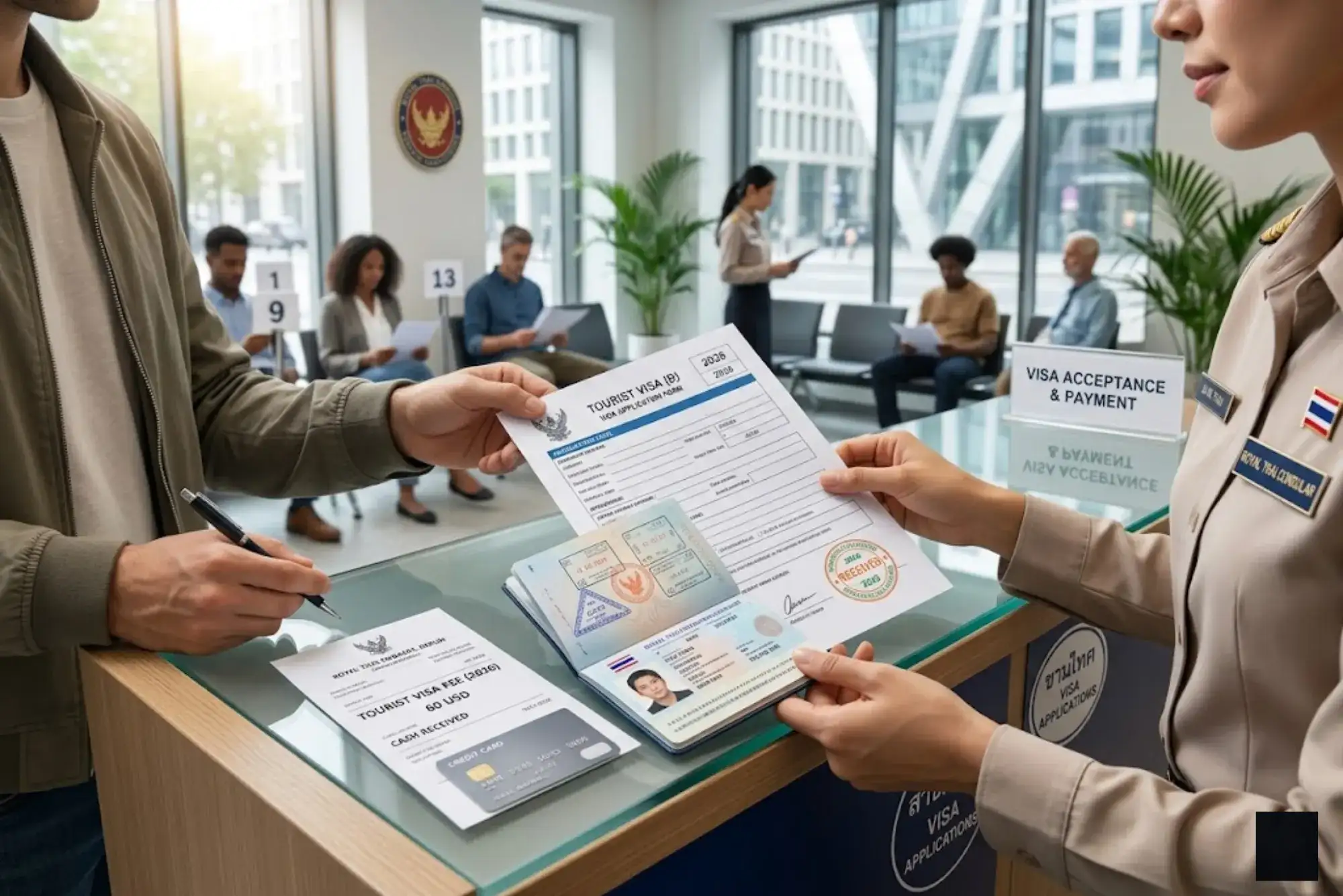
Thailand welcomed over 35 million international visitors in 2024, and the numbers are climbing steadily through 2026. Yet one question causes more last-minute panic than almost any other: exactly how much does a Thailand tour visa cost? Between consulate fees, service charges, courier costs, and optional fast-track processing, the real number can be two or three times what travellers expect when they first glance at an official government page. This guide cuts through every layer of that confusion — visa types, government fees, hidden charges, and the step-by-step process — so you can plan your budget accurately before you book a single flight.
Do You Actually Need a Visa for Thailand in 2026?
The starting point for calculating your Thailand tour visa price is determining whether you need a visa at all. Thailand operates one of the most generous visa-exemption frameworks in Southeast Asia, and 2026 has seen several new bilateral agreements come into effect.
As of 2026, citizens of approximately 65 countries — including most of Western Europe, the United States, Canada, Australia, Japan, South Korea, and several Gulf Cooperation Council (GCC) states — may enter Thailand without a pre-arranged visa for tourism stays of up to 60 days. This is sometimes called the visa-exemption entry or VOA-equivalent, and the only upfront cost is a passport-control stamp. However, the 60-day limit applies per entry, and you cannot typically renew it indefinitely without leaving the country.
Citizens of countries not on the exemption list — including many South Asian, African, and some Middle Eastern passports — must apply for a Tourist Visa (TR) before arrival. The cost structure for that application is what the bulk of this article covers.
| Entry Route | Who Qualifies | Maximum Stay | Base Cost |
|---|---|---|---|
| Visa Exemption | ~65 nationalities | 60 days (extendable once) | Free |
| Visa on Arrival (VOA) | ~19 nationalities not on exemption list | 15 days | USD 35 approx. |
| Tourist Visa Single Entry (TR-SE) | All non-exempt nationalities | 60 days + 30-day extension | USD 35–40 approx. |
| Tourist Visa Multiple Entry (TR-ME) | All non-exempt nationalities | 60 days per entry, valid 6 months | USD 200 approx. |
| Thailand e-Visa | Select nationalities via online portal | Matches TR category applied for | Same as TR + service fee |
Thailand Tourist Visa (TR) — Core Government Fee
The Thai Ministry of Foreign Affairs sets the base consulate fee centrally, but individual embassies may add their own local processing surcharge — a fact that catches many applicants off guard. The headline government fee for a single-entry Tourist Visa has remained in the range of 1,000–1,200 Thai Baht (approximately USD 28–35 or GBP 22–28) for several years, and no significant increase was announced for 2026. Multiple-entry Tourist Visas carry a substantially higher government fee, typically around 5,000 THB (approximately USD 140–150).

These amounts are payable at the Thai Embassy or Consulate in your home country. They are generally non-refundable once an application has been submitted, regardless of whether it is approved.
Full Cost Breakdown: What You Will Actually Pay
The government fee is only part of the story. Below is a complete breakdown of every cost that might apply to your Thailand tour visa application in 2026.
| Cost Component | Typical Range (USD) | Mandatory? | Notes |
|---|---|---|---|
| Government Visa Fee (Single Entry) | USD 28–40 | Yes | Varies by embassy location |
| Government Visa Fee (Multiple Entry) | USD 140–160 | Yes (if applying for TR-ME) | Higher upfront, saves money on repeat visits |
| Visa Application Service Charge | USD 10–30 | Sometimes (at VFS centres) | Charged at outsourced visa application centres |
| Courier / Document Return Fee | USD 8–20 | Optional | For postal passport return rather than in-person collection |
| Photo Fee (if not self-prepared) | USD 3–8 | Optional | Biometric photos; usually 2 required |
| Express / Priority Processing | USD 20–50 | Optional | Available at select embassies; not universally offered |
| Translation / Notarisation of Documents | USD 20–80 | Situational | Required if supporting documents are not in English or Thai |
| In-Country Extension Fee (at Immigration) | USD 17–20 (THB 1,900) | No — only if extending | Applied for at any Thai Immigration office |
Total realistic cost for most single-entry Tourist Visa applicants: USD 50–120, depending on the country of application and services used. Multiple-entry applicants should budget USD 170–250 all-in.
Thailand Visa on Arrival (VOA) — Price and Process
The Visa on Arrival is a separate product from the Tourist Visa. It is available at major international entry points — including Suvarnabhumi Airport, Don Mueang Airport, Phuket International Airport, and a handful of land border crossings — to nationals of approximately 19 countries that are not on Thailand’s exemption list but have been granted VOA eligibility by bilateral agreement.
The VOA fee is currently set at 2,000 THB (approximately USD 55–60 at 2026 exchange rates). This is paid at the immigration counter in cash — Thai Baht is strongly preferred, though some airports accept USD at an unfavourable fixed rate. The VOA grants a 15-day stay only, which cannot be extended inside Thailand. If you plan to stay longer, a pre-arranged Tourist Visa is almost always the better investment.
One practical caution: VOA queues at Bangkok’s Suvarnabhumi Airport can stretch for one to three hours during peak arrival periods (November–February). Factor this into connection times if you are transiting onwards.
Thailand e-Visa: Online Application Costs in 2026
Thailand’s official e-Visa portal (evisa.thaigov.go.th) has expanded its country coverage steadily, and in 2026 it is the most convenient route for eligible applicants. The e-Visa removes the need to visit a physical embassy and accepts all supporting documents digitally.
The government fee for an e-Visa mirrors the consulate fee for the equivalent visa category. However, a non-refundable online processing service fee of approximately USD 10–15 is added at checkout. Payment is by international credit or debit card; some portals also accept PayPal.
Approved e-Visas are emailed as a PDF that you present on arrival alongside your passport. Processing time is typically 3–5 working days for a standard application, and the portal does not currently offer a guaranteed express track — though turnaround times have generally been faster in practice.
How Embassy Location Affects the Price You Pay
A detail most travellers miss is that the same Thai Tourist Visa costs a different amount depending on where in the world you apply. Embassies convert the base Baht fee into local currency, and those conversions are updated infrequently — meaning the USD, EUR, GBP, or PKR equivalent can drift meaningfully from one review cycle to the next.
| Embassy / Consulate Location | Approximate Fee (Local Currency) | Approximate USD Equivalent |
|---|---|---|
| United Kingdom (London) | GBP 28 | ~USD 36 |
| United States (Los Angeles / New York) | USD 40 | USD 40 |
| Pakistan (Islamabad) | PKR 8,000–9,500 | ~USD 28–33 |
| India (New Delhi / Mumbai) | INR 2,500–3,000 | ~USD 30–36 |
| UAE (Abu Dhabi / Dubai) | AED 130–145 | ~USD 35–39 |
| Australia (Canberra / Sydney) | AUD 55 | ~USD 36 |
Always verify the exact fee directly with the Thai Embassy or Consulate in your country before applying, as rates can be revised at short notice.
Documents Required for a Thailand Tourist Visa
Getting your documents right on the first submission avoids resubmission fees and delays. Below is the standard document checklist for a Tourist Visa application in 2026. Individual embassies may require additional items.
- Valid passport with at least 6 months validity and 2 blank pages
- Completed visa application form (physical form at embassies; online form for e-Visa)
- Two recent passport-size photographs (4 cm × 6 cm, white background)
- Proof of onward or return travel (flight itinerary or confirmed booking)
- Proof of accommodation in Thailand (hotel bookings, Airbnb confirmation, or host invitation letter)
- Bank statement or proof of funds — minimum 20,000 THB (approximately USD 560) per person or 40,000 THB per family is a commonly cited threshold
- Proof of employment, business registration, or student enrolment (varies by embassy)
- Visa fee payment (cash, money order, or card — varies by embassy)
Step-by-Step Thailand Visa Application Process
Whether you apply in person at a consulate or online through the e-Visa portal, the journey follows a predictable sequence. Understanding each step helps you avoid the most common delays.
Step 1 — Confirm Your Visa Type
Use Thailand’s official Ministry of Foreign Affairs eligibility checker or the embassy website to confirm whether you need a visa at all, and if so, which category (TR single, TR multiple, or VOA).
Step 2 — Gather Your Documents
Compile every document on the checklist above at least two weeks before your intended travel date. Bank statements should typically cover the last three months.
Step 3 — Complete the Application Form
Download the current version of the Thai Tourist Visa application form from your embassy’s official website, or complete the online form at the e-Visa portal. Forms change periodically; using an outdated version is a common reason for same-day rejection.
Step 4 — Submit and Pay
Submit in person at the embassy or consulate (some require an appointment), via an authorised Visa Application Centre (VAC), or online through the e-Visa portal. Pay the applicable fee at the point of submission. Keep your payment receipt.
Step 5 — Wait for Processing
Standard in-person processing runs 3–5 working days at most embassies. E-Visa portal processing is similar. Do not book non-refundable travel arrangements until your visa is confirmed.
Step 6 — Collect Your Passport or Download Your e-Visa
For physical applications, collect in person or arrange courier return. For e-Visas, download and print the approval PDF. Check all details — name spelling, nationality, entry type, and validity dates — before travelling.
Extending Your Stay Inside Thailand: Cost and Process
If you entered on a Tourist Visa and wish to stay beyond the initial 60-day permission, you can apply for a 30-day extension at any Thai Immigration office. The extension fee is a flat 1,900 THB (approximately USD 53 at 2026 rates), payable on the day of the visit. You must apply before your current permission expires — overstaying incurs a fine of 500 THB per day.
Visitors who entered on a visa exemption stamp (60-day) may also apply for one 30-day extension under the same fee and process, giving a total potential stay of 90 days on a single entry without leaving the country.
Hidden and Overlooked Costs Most Travellers Miss
Beyond the government fee and service charge, several costs catch budget-conscious travellers off guard. Being aware of them in advance separates a well-planned trip from an expensive surprise.
Currency conversion margins. If you pay a consulate fee in a foreign currency, the conversion rate applied by the embassy may be less favourable than the mid-market rate. The difference on a GBP 28 fee is small, but it accumulates if you are converting at an airport or hotel as well. Planning your trip finances with apps that compare real-time exchange rates — a habit championed in guides like our top apps for budget travellers — can make a measurable difference across an entire journey.
Border run costs. Some long-term visitors attempt to extend their time in Thailand by briefly crossing into a neighbouring country and re-entering. This strategy has become less reliable as Thai Immigration has increased scrutiny on repeat border crossings. The cost of a border run — transport to the nearest crossing, time, and potential denial of re-entry — should be weighed honestly against the cost of a multiple-entry Tourist Visa or a different visa category from the outset.
Medical insurance. Thailand does not currently require proof of travel insurance for Tourist Visa holders, but healthcare costs for foreigners can be significant. Skipping insurance to save on upfront costs is a false economy on a trip to a country where even moderate medical treatment at a private hospital can run into hundreds of dollars.
Thailand Visa Price Comparison: Which Option Offers Best Value?
Value depends entirely on your travel pattern. A single short holiday is best served by a single-entry Tourist Visa or — if you are eligible — the free visa exemption. Frequent visitors, digital nomads, or travellers planning multiple entries within six months should do the arithmetic carefully.
| Travel Pattern | Recommended Option | Approx. Cost | Why |
|---|---|---|---|
| One visit, up to 60 days | Visa Exemption (if eligible) or TR Single Entry | Free or USD 50–80 | Simple, cost-effective for a single trip |
| Two visits in 6 months | TR Multiple Entry | USD 170–220 total | Cheaper than two separate single-entry fees plus repeat service charges |
| Visa on Arrival eligible, short trip | VOA | USD 55–60 | Convenient for a 15-day stay; no pre-travel admin |
| Long-term stay, repeated annual visits | Thailand Elite Visa or Retirement Visa | USD 15,000+ (Elite) / Varies | Eliminates annual reapplication costs and uncertainty |
For travellers interested in the JP Global travel tour packages that bundle visa facilitation with guided itineraries, it is worth reviewing what those tour operators include — the JP Global travel tour Thailand page outlines the key package inclusions. Some tour programmes assist with the visa process and may absorb certain administrative fees.
Common Mistakes That Cost Travellers Extra Money
After years of documenting traveller experiences across Southeast Asia, a handful of avoidable errors come up again and again in relation to Thailand visa costs.
Applying too late. Submitting a Tourist Visa application fewer than 10 working days before your intended departure creates pressure to pay for express processing — if it is available at all — or to change flight dates. Start the process at least three weeks out.
Underestimating proof-of-funds requirements. If your bank statement shows less than the embassy’s minimum threshold, your application can be refused outright, with no refund of the fee. Check the specific requirement for your embassy before submitting.
Using an unlicensed visa agent. Third-party visa agencies are common and often legitimate, but unlicensed operators charge inflated fees and provide no recourse if an application fails. If you use an agent, verify they are officially recognised by the Thai Embassy in your country.
Not accounting for public holidays. Thai public holidays (of which there are many) can close the embassy for consecutive days. Check the holiday calendar at both the Thai Embassy in your country and the Thai Immigration calendar if you plan to extend inside Thailand.
Overstaying. The 500 THB per day overstay fine accumulates quickly, and repeat overstays can result in bans from re-entry. If your trip is running over, visit an Immigration office — not the airport — before your permission expires.
Thailand Visa for Families and Group Travel
Each traveller — including children — requires their own visa or visa exemption entry. There is no group or family visa product for Tourist Visa holders. For a family of four applying for single-entry Tourist Visas from a country without exemption, budget for four separate government fees plus four sets of service charges and photographs, which can easily total USD 250–400 before any travel has taken place.
Children travelling on their own passport follow the same process as adults. Children listed in a parent’s passport (a practice now discontinued in many countries but still valid in some) share the parent’s entry permission and pay no separate fee.
Special Cases: Visa for Specific Nationalities
Pakistani Passport Holders
Pakistani nationals require a Tourist Visa before arrival. The Thai Embassy in Islamabad and the Consulate in Karachi handle applications. Required documents are broadly consistent with the standard checklist above, though proof of employment and bank statements are scrutinised closely. Processing typically runs 3–7 working days.
Indian Passport Holders
Indian nationals are not on the visa exemption list for standard tourist entries as of 2026 and must apply for a Tourist Visa at the Thai Embassy in New Delhi or consulates in Mumbai, Chennai, or Kolkata. India-specific requirements may include a No Objection Certificate (NOC) from an employer in some circumstances.
GCC Residents
Citizens of several GCC countries (Saudi Arabia, UAE, Qatar, Kuwait, Bahrain, Oman) benefit from visa exemption for Thailand, making their Thailand tour visa price effectively zero for stays under 60 days. Residents of GCC countries who hold other nationalities must follow the rules applicable to their passport nationality — not their country of residence. If you are researching travel from the UAE more broadly, the AC employee travel guide covers regional travel planning considerations.
What to Do If Your Thailand Visa Application Is Refused
Refusals are uncommon for straightforward Tourist Visa applications, but they do occur — most often due to incomplete documentation, insufficient funds, or a prior overstay on record. The government fee is not refunded in cases of refusal.
If refused, you can generally reapply with a stronger application once the deficiency has been addressed. There is no mandatory waiting period after a first refusal, though the embassy may note the previous refusal in your record. Seek clarity in writing from the embassy about the specific reason for refusal before reapplying, as submitting the same incomplete package a second time simply results in a second non-refundable fee loss.
Budgeting Your Total Thailand Trip: Where the Visa Fits
The Thailand tour visa cost is a meaningful but relatively modest fraction of total trip expenditure. For a two-week holiday, flights typically represent the largest single spend, followed by accommodation and daily living costs. Travellers who invest time in researching visa options often find equally significant savings available in the accommodation category — particularly outside the peak November-to-February window.
If you are comparing destination costs and weighing Thailand against other Southeast Asian options, the broader framework of trip budgeting starts well before the visa stage. For travellers who also use guided tour services in the region, our complete hiking guide to Vietnam illustrates how planning depth at the research stage pays dividends throughout a trip — the principle applies equally to Thailand itineraries.
Frequently Asked Questions
How much is a Thailand tourist visa in 2026?
The base government fee for a single-entry Tourist Visa is approximately USD 28–40, depending on the issuing embassy. With service charges, photos, and courier fees, total out-of-pocket costs typically range from USD 50 to USD 120. Multiple-entry Tourist Visas cost around USD 140–160 in government fees, with a total all-in cost of USD 170–250.
Can I get a Thailand visa for free?
Yes — if your nationality is on Thailand’s visa exemption list (approximately 65 countries including the US, UK, Australia, most EU states, and several GCC nations), you enter for free for stays up to 60 days. Check the Thai Ministry of Foreign Affairs website for the current country list.
How long does it take to get a Thailand visa?
Standard processing at embassies and on the e-Visa portal runs 3–5 working days in most cases. Allow at least 2–3 weeks from application to travel date to account for document preparation, potential queries, and postal return of your passport.
Is the Thailand visa fee refundable if refused?
No. The government visa fee is non-refundable regardless of the outcome of the application. Service charges paid to third-party visa application centres are similarly non-refundable once processing has begun.
What is the difference between a Thailand Tourist Visa and a Visa on Arrival?
A Tourist Visa is arranged before travel at a Thai Embassy or through the e-Visa portal, grants 60 days with an optional 30-day extension, and is available to all non-exempt nationalities. A Visa on Arrival is issued at the airport or border crossing to eligible nationals only, grants 15 days only, and cannot be extended inside Thailand.
Do I need a visa for Thailand if I am transiting?
Airside transit (remaining within the international zone without passing through immigration) does not require a visa. If you plan to exit the airport during a layover, you need either a visa exemption entry or a valid Tourist Visa.
Final Thoughts: Plan Your Visa Costs Before You Pack
The Thailand tour visa price in 2026 is not a single number — it is a range shaped by your nationality, the embassy you apply through, the services you use, and the visa category that best suits your travel pattern. For most visitors from exempt countries, the cost is zero. For those who need a Tourist Visa, budgeting USD 60–120 for a single-entry application covers the realistic all-in cost in most jurisdictions.
The single most expensive mistake is leaving the visa process too late, forcing you into express fees or, worse, a missed departure. Start early, verify the current fee directly with your local Thai Embassy, and ensure your supporting documents — particularly bank statements and accommodation bookings — are complete and credible. A well-prepared application is approved quickly, and a quickly approved visa means you spend more energy planning the things that actually make a Thailand trip extraordinary.
For those exploring the upper end of the Thailand residency spectrum, the premium long-stay programme is covered in comprehensive detail on the Thailand Elite Visa prices page — a worthwhile read if you are considering Thailand not just for a holiday but as a recurring base.