Introduction
Traveling with a dog is exciting, but unfamiliar places create risks that do not exist at home. A hotel door can open unexpectedly, a dog can slip its leash at a rest stop, or an adventurous pup can disappear around a trail bend. That is why choosing the best GPS dog trackers for traveling is more than a technology decision. It is an important part of responsible pet travel.
The challenge is that “GPS tracker” can describe several very different technologies. Cellular trackers use mobile networks to transmit your dog’s GPS location to an app. Bluetooth devices depend on nearby smartphones and are better suited to short-range finding or backup use. Satellite and radio-based systems are designed for remote environments where cellular coverage may disappear.
The right choice depends on where you travel, how your dog behaves, how long you will be away, and whether you expect to spend time outside cellular coverage. Understanding those differences before buying can help you choose a tracker that actually works when you need it.
Why GPS Tracking Matters When Traveling With a Dog
Dogs do not necessarily understand that an unfamiliar destination is temporary. A dog that reliably stays close to you at home may react differently to a new campsite, busy city, airport, beach, or hiking trail.
Travel also creates more opportunities for accidental escapes. A front door may not latch properly. A hotel room may have unfamiliar entrances. During road trips, dogs can become frightened by traffic, loud noises, or unfamiliar surroundings.
A reliable tracker gives you an additional layer of protection. Instead of relying entirely on someone spotting your dog or hoping the dog returns on its own, you can use location technology to determine where your pet was recently seen or, with a suitable live tracker, where the dog is moving.

The important word is “suitable.” Not every device marketed as a pet tracker provides live GPS tracking.
How GPS Dog Trackers Work
A true GPS tracker generally uses satellites to determine the dog’s position. However, GPS itself does not automatically send that location to your phone.
The communication method is what separates different tracker categories.
A cellular GPS tracker combines satellite positioning with a cellular connection. The device determines its location and sends that information through a mobile network to the manufacturer’s servers. Your phone app then displays the location.
Bluetooth trackers work differently. They communicate over Bluetooth with nearby compatible smartphones or devices. A crowdsourced network may then help report the tag’s approximate location. This can be useful in populated areas, but it is not equivalent to continuous GPS tracking.
Satellite-connected equipment is designed for situations where cellular networks are unavailable. Some systems combine GPS positioning with satellite communication, while specialized dog-tracking systems may use radio between the collar and a handheld receiver. Garmin, for example, offers dog-tracking equipment combining VHF tracking with LTE and satellite communication features depending on the configuration.
That distinction becomes extremely important when your travel plans include mountains, forests, deserts, or other remote areas.
Cellular GPS Trackers: Best for Most Travelers
For ordinary vacations, road trips, city travel, and trips where mobile coverage is reasonably available, cellular devices are usually the easiest option.
A cellular tracker typically connects to an app on your smartphone. Depending on the device and subscription, you may receive live location updates, escape alerts, location history, activity information, virtual boundaries, and other features.
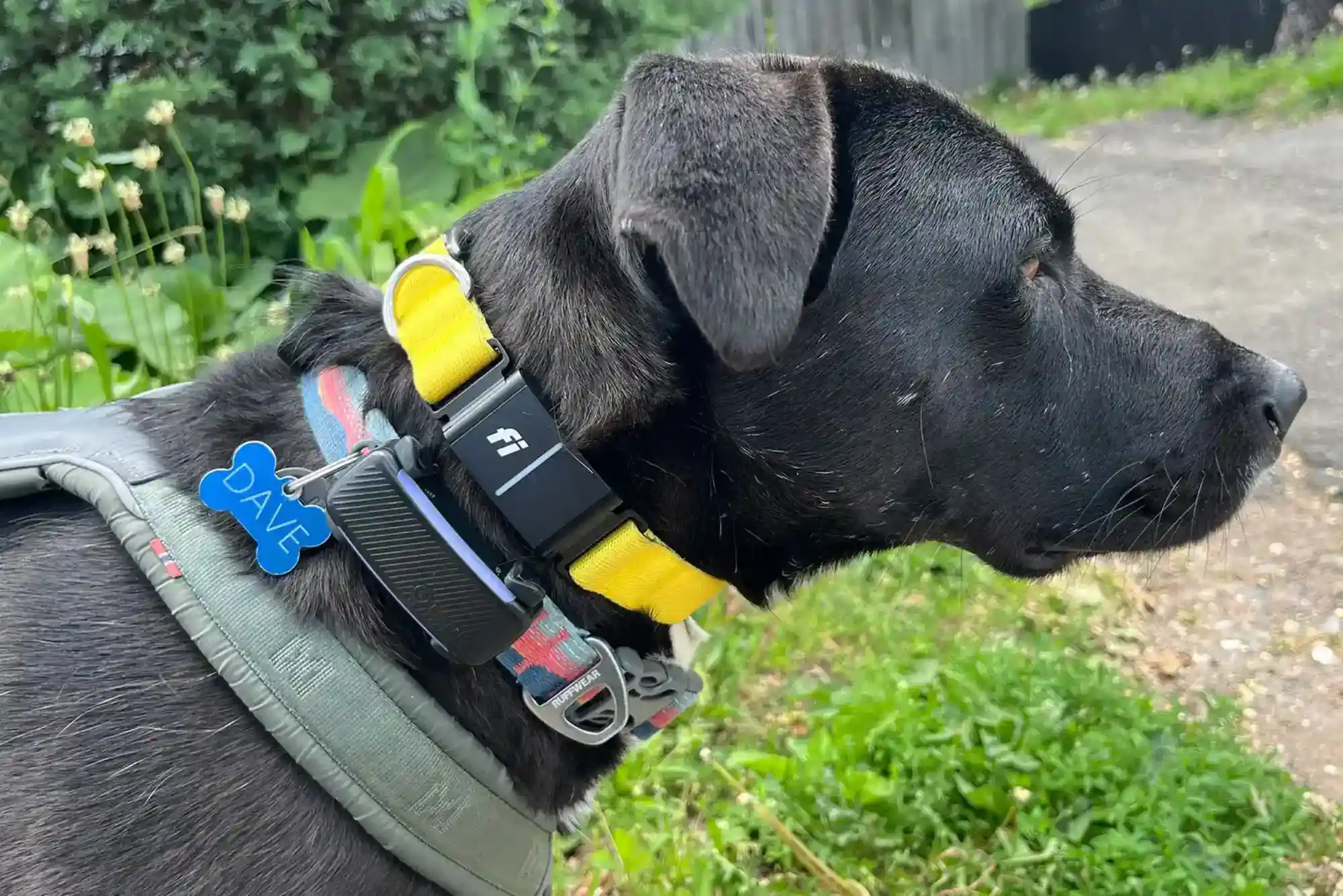
Current tracker comparisons frequently place devices such as Tractive and Fi among the leading cellular options. The main advantage is convenience: you generally do not need a separate tracking receiver. Your smartphone becomes the interface for monitoring your dog.
Advantages of cellular tracking
The biggest advantage is practical usability. If your dog runs out of a hotel, vacation rental, or campground and the tracker has cellular coverage, you can open the app and check its location.
Many cellular trackers also offer virtual fence or escape notifications. Instead of constantly watching the app, you can receive an alert when your dog leaves a defined safe area.
Another benefit is travel flexibility. Some modern trackers support cellular networks across multiple countries, although international coverage varies by product and subscription. Always verify coverage for the countries on your itinerary before purchasing.
The biggest limitation
Cellular tracking depends on cellular infrastructure. If your dog disappears in a place with no compatible network coverage, live tracking may stop.
That does not mean the GPS component has stopped determining location. The problem is transmitting that location to you.
This is why a cellular tracker can be excellent for an urban vacation but a poor standalone choice for a remote wilderness trip.
Bluetooth Trackers: Useful Backup, Not Full GPS Tracking
Bluetooth tags are attractive because they are inexpensive, compact, and generally do not require the subscription associated with cellular GPS trackers.
However, calling a Bluetooth tag a full GPS tracker can create unrealistic expectations.
Apple’s current AirTag, for example, is designed for tracking objects rather than people or pets. It uses Bluetooth and the Find My network rather than functioning as an independent cellular GPS pet tracker.
When a compatible nearby device detects the tag, its location can be relayed through the network. This can be surprisingly useful in busy places such as airports, shopping areas, neighborhoods, and city centers.
But imagine your dog running into an empty field or remote hiking trail. If there are no compatible devices nearby to detect the Bluetooth signal, the tag cannot provide the same kind of continuous location information as a cellular tracker.
When Bluetooth makes sense
Bluetooth tracking can be valuable as a second layer of protection. For example, a traveler could use a dedicated cellular GPS tracker as the primary device and attach a Bluetooth tag as an inexpensive backup.
It can also be useful when the main concern is finding a dog that has wandered nearby rather than tracking a dog several miles away.
The key is to understand its limitations before depending on it.
Satellite and Radio Trackers for Remote Travel
If your travel plans involve genuine backcountry conditions, satellite or radio-based tracking deserves serious consideration.
A specialized radio dog-tracking system can communicate directly between the dog’s collar and a handheld receiver. Because it does not depend on nearby cell towers, it can continue working in areas where a conventional cellular tracker cannot communicate.
Garmin’s Alpha ecosystem is a good example of this approach. Its compatible dog collars can be tracked using dedicated handheld equipment, while the Alpha 300i also includes inReach capabilities for satellite messaging and SOS functions.
Why remote travelers choose these systems
The major advantage is independence from cellular networks.
Suppose you are hiking through a mountain region where your phone displays “No Service.” A cellular tracker may stop sending live information. A radio-based dog-tracking system can still communicate directly with the compatible handheld when conditions and range permit.
Satellite communication adds another layer for messaging and emergency communication. Garmin’s inReach technology uses the Iridium satellite network for features such as messaging and SOS on compatible devices.
The trade-off
These systems are generally more expensive and complicated than consumer cellular trackers. You may need a dedicated handheld, compatible collar, additional subscriptions for satellite services, or more preparation before a trip.
For someone spending weekends walking city streets, that can be unnecessary.
For a hunter, wilderness traveler, or serious backcountry hiker, however, the additional capability can be worth the investment.
Cellular vs. Bluetooth vs. Satellite: Which Is Best for Travel?
There is no universal winner because the technologies solve different problems.
For normal vacations, road trips, hotels, beaches, and populated hiking areas, cellular tracking is usually the most practical choice. You get an app-based experience, live tracking where coverage exists, and features such as escape alerts.
Bluetooth is best viewed as a supplementary finding tool. It is affordable and convenient but should not be treated as equivalent to live GPS tracking.
Satellite and radio systems are more appropriate for remote adventures. They become particularly valuable when cellular coverage is unreliable or nonexistent.
The best GPS dog trackers for traveling are therefore the ones that match your destination rather than simply the ones with the longest feature list.
What to Look for in a Travel Dog Tracker
Battery life
Battery life becomes more important during travel because charging opportunities may be limited. A tracker that needs frequent charging can become a liability during camping or long road trips.
Check the manufacturer’s expected battery life under realistic tracking conditions rather than assuming the maximum advertised figure will apply during continuous live tracking.
Water resistance
Dogs encounter water everywhere: beaches, rain, puddles, swimming pools, and muddy trails. A tracker intended for travel should be designed to tolerate the environments your dog is likely to encounter.
Comfort and weight
A tracker should not interfere with normal movement. Small dogs may need a particularly lightweight device, while larger dogs can generally tolerate more substantial hardware.
The attachment system matters as well. A tracker that can easily detach from the collar is not much help if your dog escapes.
Coverage
Coverage should be one of your first questions, not an afterthought.
Before an international trip, check whether the device supports the countries you are visiting. For wilderness travel, determine whether cellular service exists along your route. If not, consider radio or satellite technology.
Escape alerts
An escape alert can be more useful than simply checking a map manually. If your dog leaves a defined safe zone, an immediate notification gives you an opportunity to react before the distance becomes significant.
Subscription costs
Many cellular trackers require an ongoing subscription because the company is paying for network connectivity and cloud services.
Compare the total cost over the period you expect to own the tracker, rather than judging the device solely by its purchase price.
How to Use a GPS Dog Tracker Safely During Travel
Buying a tracker is only the first step. Test it before leaving home.
Put the tracker on your dog’s collar and walk around your neighborhood. Check how quickly location updates appear and whether notifications work as expected. Test the app before you actually need it.
Charge the device fully before starting a long journey. If possible, carry a charging cable or power bank that works with the tracker.
Your dog should also continue wearing an identification tag with a current phone number. A GPS tracker is an electronic safety layer, not a replacement for visible identification and a secure collar.
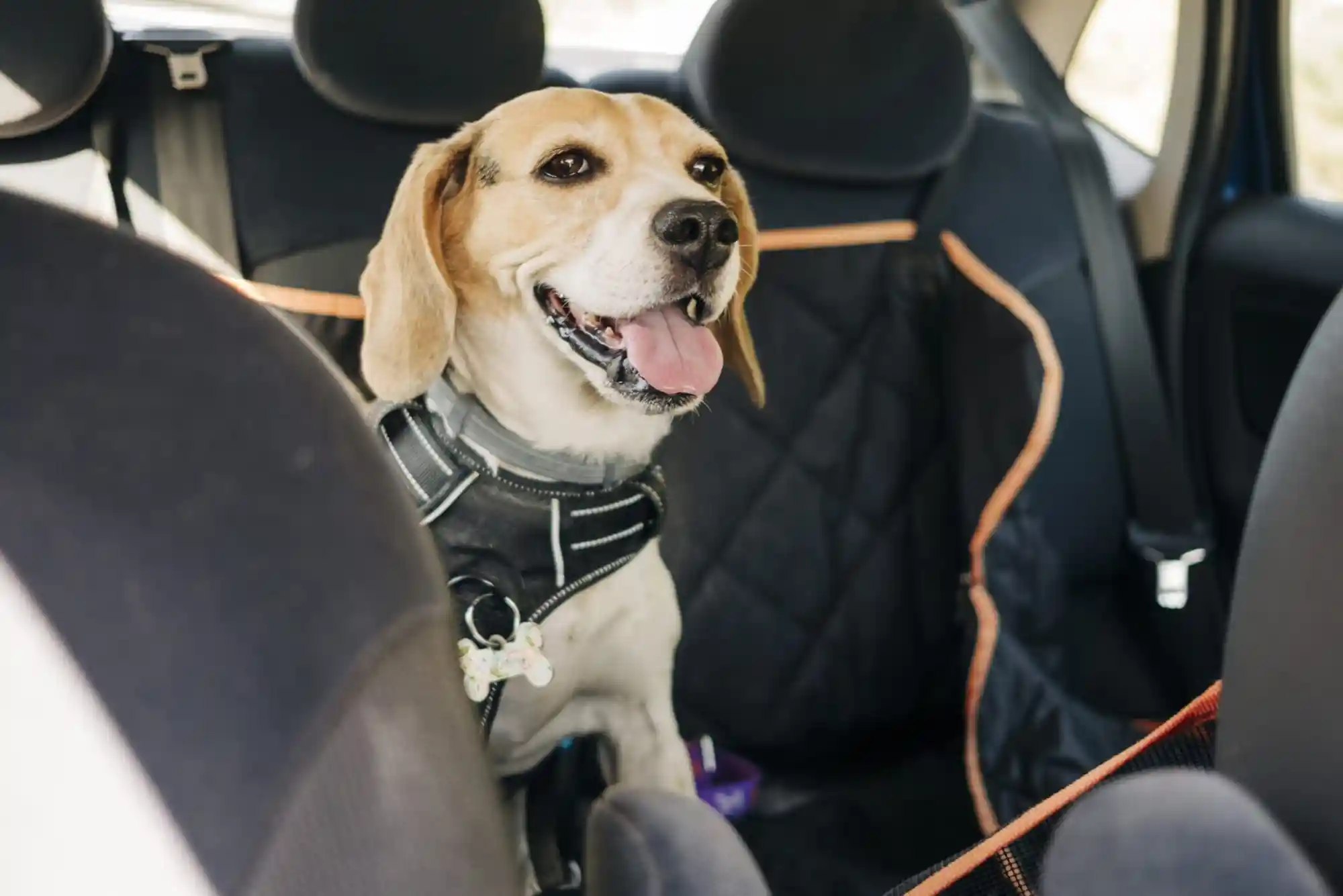
During road trips, make sure your dog is safely restrained inside the vehicle. A tracker cannot prevent an accident or stop a dog from running into traffic.
For hiking and camping, check coverage before entering remote areas. If your route has known cellular dead zones, do not assume a cellular tracker will continue providing live updates.
Best GPS Dog Trackers for Traveling: Choosing by Trip Type
For an international city vacation, a cellular tracker is generally the most convenient option. It lets you monitor your dog through a smartphone and can provide useful escape notifications.
For a road trip through towns and populated areas, cellular tracking remains a strong choice. Adding a Bluetooth tag can provide another recovery option.
For camping near reliable cell coverage, a cellular tracker can work well, provided its battery and weather resistance match the conditions.
For serious backcountry hiking, hunting, or remote camping, look beyond ordinary cellular devices. A radio-based tracking system or equipment with satellite communication can provide capabilities that cellular-only products cannot.
For a dog that frequently escapes, prioritize fast alerts, reliable positioning, durable construction, and sufficient battery life. In this situation, convenience matters less than how quickly you can respond to an escape.
Are GPS Dog Trackers Worth It for Travel?
For many dog owners, yes.
The value of a tracker becomes obvious when something goes wrong. A dog that disappears in an unfamiliar location can be extremely difficult to find, particularly when you do not know the surrounding streets, trails, or terrain.
The important point is not simply to buy the most expensive tracker. Choose technology that matches your travel environment.
A cellular tracker is often the sensible everyday choice. A Bluetooth tag can provide inexpensive backup capability. Satellite or radio equipment makes more sense when your adventures take you beyond reliable cellular coverage.
Thinking about those differences before your trip can turn a confusing purchase into a straightforward safety decision.
Choose the Right Tracker Before You Travel
The best GPS dog trackers for traveling are not necessarily the newest or most expensive devices. The best tracker is the one that can communicate reliably in the places where you and your dog will actually travel.
Cellular trackers offer the strongest combination of convenience, live tracking, and smartphone integration for everyday trips. Bluetooth devices can provide a useful backup in populated areas but should not replace a dedicated GPS tracker when reliable tracking is important. For remote adventures, radio and satellite technology can provide a much stronger safety net when cellular networks disappear.
Before your next trip, test the tracker, charge it fully, confirm coverage, secure it properly to your dog’s collar, and keep traditional identification on your pet as well. A few minutes of preparation can make a major difference if your dog ever wanders farther than expected.
FAQs
What is the best GPS tracker for a dog?
The best tracker depends on how and where you travel. For most everyday trips, a cellular GPS tracker is the most practical because it provides app-based location tracking where mobile coverage is available. For remote areas, a radio or satellite-capable system may be more appropriate.
Do GPS dog trackers work without cell service?
It depends on the technology. Cellular GPS trackers generally need cellular coverage to transmit the dog’s location to your phone. Dedicated radio-based dog trackers can communicate directly with a compatible handheld without cellular service. Satellite-enabled equipment can provide communication and tracking functions in areas outside normal mobile coverage.
Can I use an AirTag instead of a GPS tracker for my dog?
An AirTag can be used as an additional way to help locate a lost pet, but it is not equivalent to a dedicated GPS dog tracker. Apple states that AirTag is designed for tracking objects rather than people or pets. Its location system relies on Bluetooth and the Find My network, so performance depends heavily on nearby compatible devices.
Do GPS dog trackers work internationally?
Some cellular trackers support multiple countries, but international availability varies by device, carrier partnerships, and subscription. Always check the manufacturer’s coverage information for every country on your itinerary before traveling.
Is there a GPS dog tracker that does not require a monthly fee?
Yes, some radio-based dog-tracking systems do not require a cellular tracking subscription. However, they may require a dedicated handheld receiver and can have a higher upfront cost. Satellite communication features can involve separate service plans.
How accurate are GPS dog trackers?
Accuracy varies with the device, satellite visibility, environment, update frequency, and communication method. Open outdoor areas generally provide better positioning conditions than dense buildings, heavy vegetation, or steep terrain. A tracker should be evaluated by its overall reliability rather than a single advertised accuracy number.
Should my dog wear both a GPS tracker and an ID tag?
Yes. A GPS tracker and visible identification serve different purposes. The tracker can help you locate your dog electronically, while an ID tag allows a person who finds your dog to contact you immediately without needing special equipment.
What should I do before traveling with a GPS dog tracker?
Charge the device, install and test its app, confirm that the subscription is active if required, verify coverage for your destination, test escape alerts, and make sure the tracker is securely attached to your dog’s collar. It is better to discover a setup problem at home than after your dog disappears in an unfamiliar place.