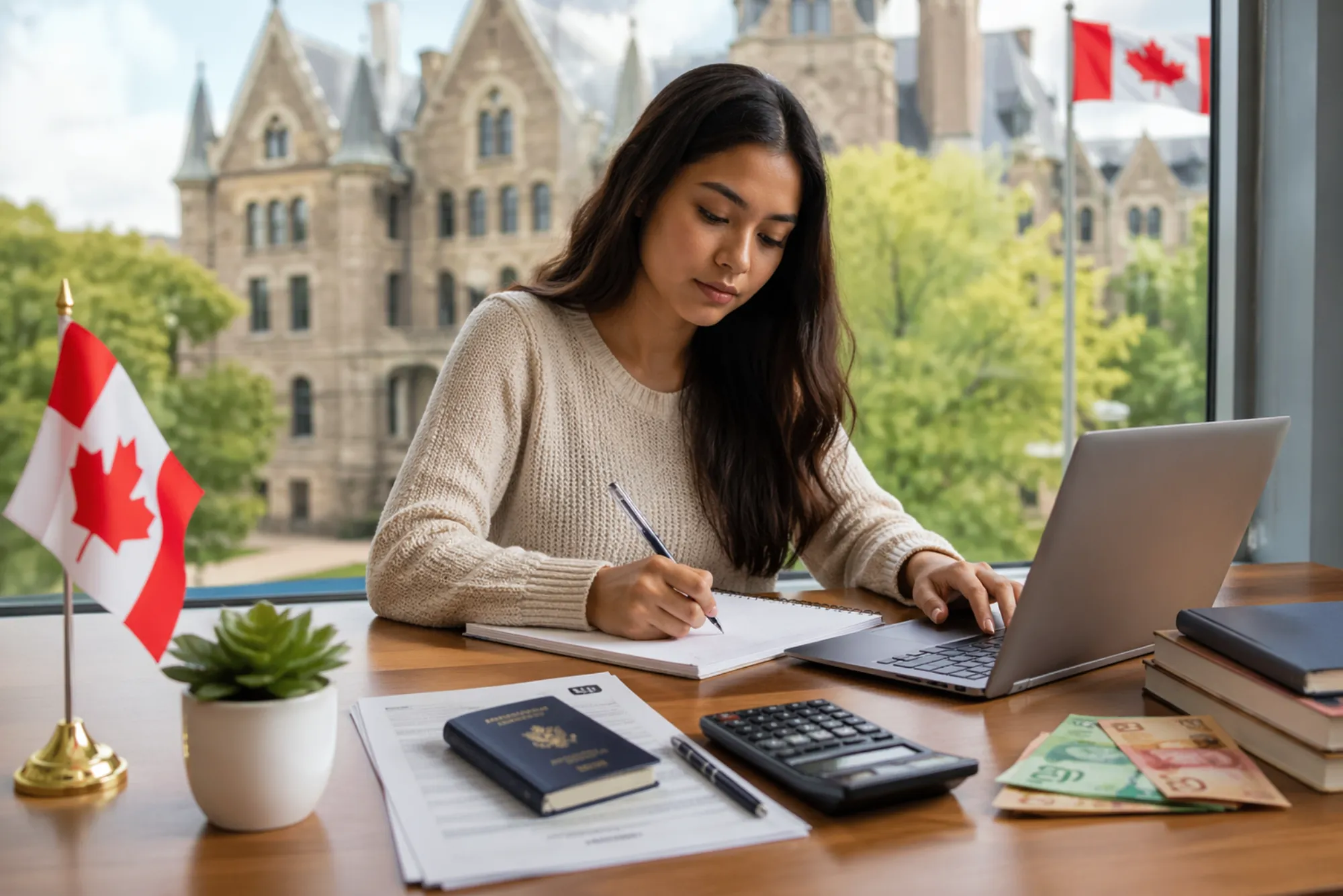
Planning higher education in Canada requires a clear understanding of the total financial commitment involved in the application process. Although many applicants commonly refer to it as a “student visa,” the official authorization issued by Canadian immigration authorities is called a study permit. In 2026, the standard government application fee is CAD 150, and most candidates are also required to pay a biometrics fee of CAD 85.
That basic amount is only the starting point. Depending on your situation, the total cost can rise because of medical exams, document translation, courier charges, tuition deposits, and travel-related expenses. This guide breaks down the latest fees, extra charges, and the overall process so you can budget properly before you apply.
Quick Answer: What Is the Canada Student Visa Price in 2026?
The short answer is this: the official Canadian study permit fee in 2026 is CAD 150 per person. If you need biometrics, that adds CAD 85 for an individual applicant, so the common starting total is CAD 235. Extra costs such as medical exams, document preparation, and travel to a biometrics collection point are separate and vary by applicant.
Canada Student Visa Fee Breakdown in 2026
For most international students, the first part of the budget is the direct government fee. Canada’s official fee list shows the study permit fee clearly, and the biometrics page confirms the standard individual biometrics charge. These are the two numbers most students should know before starting the application.
| Fee Type | Estimated Cost |
|---|---|
| Study Permit Application Fee | CAD 150 |
| Biometrics Fee | CAD 85 |
| Common Basic Total | CAD 235 |
This table reflects the standard starting cost for a typical individual applicant. It does not include third-party or country-specific expenses, and it also does not include tuition or settlement costs. Students should think of it as the government application starting point, not the full education budget.
Why the Total Cost Is Usually Higher Than CAD 235
Many students assume that once they know the application fee and biometrics fee, they know the whole price. In practice, that is rarely true. Canada’s study permit process may involve extra steps and supporting requirements, and some of those costs are paid directly to third parties rather than to IRCC.
Medical Exam Costs
IRCC says you may need a medical exam depending on your situation, and students can choose an upfront medical exam before applying. The cost is not fixed by IRCC on one universal fee page because it depends on the panel physician and location, so it is better to treat this as a variable third-party expense rather than assume one exact number for everyone.
Document Translation and Certification
If your documents are not in English or French, you may need certified translations. IRCC’s police certificate guidance also notes that translated documents may be required in some cases, and that usually means extra third-party charges. The exact amount depends on the document type and local provider.
Travel and Appointment Expenses
Even when the application is online, students may need to travel to give biometrics at an official collection point. That means transportation, possible hotel costs, and time away from work or study preparation. IRCC advises applicants to pay the biometrics fee when applying and then wait for the biometrics instruction letter before completing that step.
Tuition Deposit and Pre-Arrival Spending
IRCC’s study permit document guidance says that in most cases you need to accept your offer and pay tuition in part or in full to get your PAL or TAL. That is not a visa fee, but it is still part of the practical cost of moving toward a Canadian study permit application.
What Documents Affect Your Student Visa Budget?
Canada’s study permit eligibility and document pages make it clear that students need more than just the application form. You generally need an acceptance letter from a designated learning institution, proof of financial support, and in many cases a provincial attestation letter or territorial attestation letter. Some applicants may also need a medical exam or other supporting records depending on their circumstances.
- Acceptance letter from a designated learning institution
- Proof of financial support
- Passport and identity documents
- PAL or TAL in most cases
- Medical exam if required
- Biometrics if required
The most financially important part here is proof of funds. IRCC says you must show enough money to cover tuition, living expenses, and transportation to and from Canada. So even if the visa application itself looks affordable, the real readiness test is whether you can document the larger education budget.
PAL/TAL Rules in 2026
One of the biggest process points in recent Canadian study permit applications is the PAL or TAL requirement. IRCC says most study permit applicants need a provincial attestation letter or territorial attestation letter when they apply, although there are exceptions. This requirement can affect both timing and indirect costs because many students need to confirm admission and often pay tuition before getting the letter.
There is also an important 2026 update for some graduate applicants. Canada says that if you are applying after January 1, 2026 to attend a public DLI master’s or doctoral degree program that is PAL/TAL-exempt, you do not need a PAL or TAL for that program. That can simplify the process for some advanced-degree applicants, although they still need their letter of acceptance and other required documents.
Step-by-Step Canada Student Visa Process
The application process becomes easier when you treat it as a sequence instead of one big task. Canada’s study permit guidance explains that you should first make sure you have the right documents, including your acceptance materials and any PAL or TAL you need, and then submit your application online with the correct fees.
- Choose a designated learning institution and receive your acceptance letter.
- Get your PAL or TAL if your application requires one.
- Prepare proof of funds, passport, and supporting documents.
- Complete the online study permit application.
- Pay the study permit fee and biometrics fee if applicable.
- Wait for your biometrics instruction letter and give biometrics at an official location.
- Complete a medical exam if required.
- Wait for a decision and prepare for travel after approval.
This process is why budgeting cannot stop at the CAD 150 application fee. The student who prepares financially and documents everything early usually avoids the hidden costs that come from rushing, rebooking, or resubmitting.
Student Life Costs vs Visa Costs
The visa itself is only one small part of studying in Canada. Tuition, rent, groceries, transport, and winter clothing often matter much more financially than the permit fee. That is why students should separate “application cost” from “study in Canada budget” when planning their money.
Before choosing your city, it helps to explore broader Canada travel and place guides so you get a better feel for different regions, climates, and city lifestyles. This will not tell you your exact tuition bill, but it does help you think more realistically about where you want to live and what daily life may feel like.
If you are comparing student life in specific cities, even lifestyle articles can be useful for understanding the local feel. For example, exploring guides like where to eat in Calgary can give you a small but practical glimpse into everyday city living beyond the visa process itself.
Helpful Planning Resources Before You Apply
It is also smart to keep your research organized. Budgeting, document deadlines, biometric appointments, and travel planning all become easier when you use reliable tools and notes. A good planning routine reduces last-minute mistakes and keeps your costs under control.
Students who want a smoother planning routine can also look at travel planning apps for budget-conscious travellers to organize checklists, transport, and reminders before departure. It is not a visa rule, but it is the kind of practical preparation that makes an international move less stressful.
And if you want to compare this topic with other international fee-focused posts, the site’s visa prices category can also help you see how Canada’s study permit cost fits into a wider global visa-cost picture.
Common Mistakes That Increase the Total Cost
Many students spend more than necessary because they focus only on the form and ignore the bigger process. The most common problem is starting the application before understanding the required documents and timeline. Another is forgetting that the visa fee is separate from proof of funds, tuition deposits, and other pre-arrival expenses.
- Applying before collecting the right documents
- Ignoring the PAL or TAL requirement
- Forgetting biometrics or medical exam costs
- Assuming the application fee is the full student budget
- Using unofficial fee estimates instead of IRCC guidance
A careful applicant usually saves money by preparing once and submitting properly. A rushed applicant often pays more in indirect costs, delayed travel, and repeated document work.
Frequently Asked Questions
How much is the Canada student visa fee in 2026?
The official Canada study permit fee is CAD 150 per person. If biometrics are required, the standard individual biometrics fee is CAD 85, making the common basic total CAD 235.
Is the study permit the same as a student visa?
In casual conversation, many people say student visa, but the main approval document for studying in Canada is the study permit. Depending on your case, you may also receive travel authorization documents linked to your approval.
Do all students need biometrics?
Many study permit applicants do need biometrics unless they qualify for an exemption. IRCC says applicants should usually pay the biometrics fee when they submit the application to avoid delays.
Do I need proof of funds for a Canada study permit?
Yes. IRCC says you must prove that you have enough money to pay your tuition fees, living expenses, and transportation costs for yourself and any accompanying family members.
Do most students need a PAL or TAL in 2026?
Yes, most study permit applicants need a provincial or territorial attestation letter unless they fall under one of the official exceptions. Some public master’s and doctoral programs are PAL/TAL-exempt for applications after January 1, 2026.
Conclusion
The student visa price for Canada in 2026 starts with a study permit fee of CAD 150, and for many applicants the next standard cost is the CAD 85 biometrics fee. That gives a common baseline of CAD 235, but the real total can rise once you include medical exams, document preparation, tuition deposits, and travel-related costs.
The smartest way to budget is to separate the official government charges from the wider study-abroad expenses. If you understand the process, prepare your documents early, and budget for both the permit and the practical move to Canada, you will be in a much stronger position to apply with confidence.