The UK visa application process has evolved significantly over the past decade, both in structure and pricing. For travelers, students, and professionals planning to move or visit the United Kingdom in 2026, understanding the updated visa fees is essential for proper financial planning.
However, looking at only the current price does not give the full picture. Visa costs have changed steadily over the years due to inflation, policy adjustments, and administrative improvements. By analyzing both the present fees and historical trends from 2010 to 2026, applicants can better understand how the system has developed and what to expect in the future.
This article provides a complete breakdown of UK visa prices, including current charges, hidden costs, and a detailed historical table that shows how fees have increased over time.
Understanding UK Visa Pricing in 2026
The UK visa system is structured around different categories such as tourism, study, work, and long-term settlement. Each category has its own pricing model depending on processing time, duration of stay, and eligibility requirements.
In 2026, visa fees continue to reflect operational costs, inflation, and digital transformation in immigration systems. Applicants should understand that the total cost is not just the visa fee itself but also includes healthcare surcharges and optional service charges.
These combined costs often make the UK visa process more expensive than many other countries, but the system is also designed to provide efficient processing and access to public services where applicable.
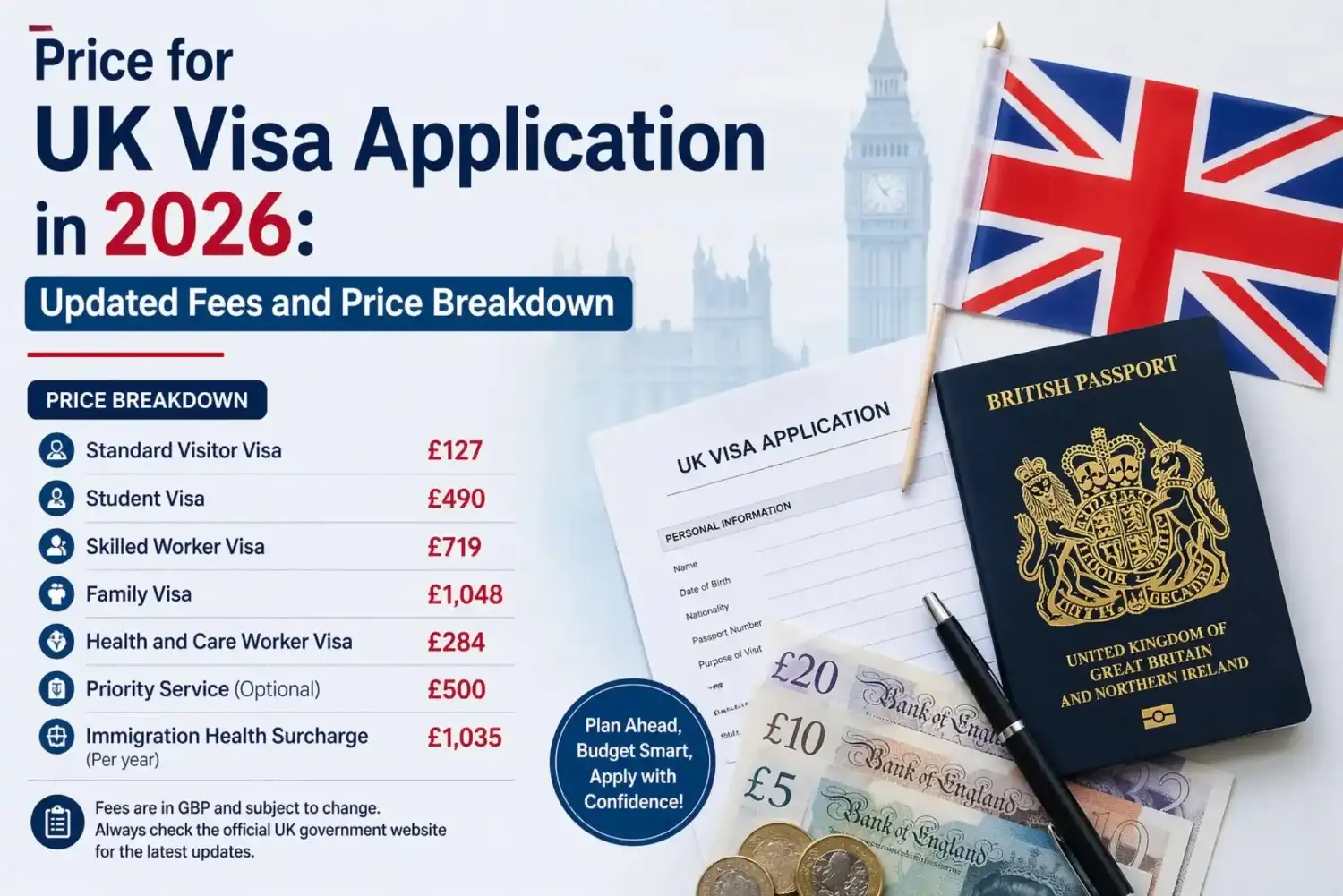
UK Visa Fee Structure in 2026
The total cost of a UK visa application generally includes three major components:
The first is the standard visa application fee, which varies based on visa type. The second is the Immigration Health Surcharge (IHS), which allows applicants access to the UK’s healthcare system during their stay. The third includes optional services such as priority processing or premium appointment scheduling.
For example, students and workers often pay significantly more than tourists due to the inclusion of the health surcharge, which is calculated per year of stay.
UK Tourist Visa Cost in 2026
The Standard Visitor Visa remains one of the most commonly applied-for categories. It is used for tourism, business visits, and short-term family stays.
In 2026, the short-term visa fee remains relatively stable compared to recent years, but long-term visitor visas (2, 5, or 10 years) are considerably more expensive.
Despite the higher upfront cost, frequent travelers often prefer long-term visas as they reduce the need for repeated applications.
UK Student Visa Cost in 2026
The UK continues to attract thousands of international students each year. The Student Visa remains a crucial pathway for higher education.
In 2026, students must pay both the visa application fee and the Immigration Health Surcharge. The IHS often becomes the largest part of the total cost, depending on the length of the academic program.
Universities also recommend students prepare additional funds for living expenses, accommodation, and travel, which are separate from visa charges.
UK Work Visa Fees in 2026
Work visas, especially the Skilled Worker Visa, are more complex and expensive due to sponsorship requirements.
The total cost depends on job type, salary level, and employer sponsorship status. In many cases, employers cover part of the cost, but applicants should still be prepared for personal expenses such as documentation, health surcharge, and processing fees.
Certain shortage occupation roles may benefit from reduced fees or easier approval conditions.
Additional Costs Beyond Visa Fees
Apart from official visa charges, applicants must also consider additional expenses.
Biometric enrollment is required for almost all applicants, which involves fingerprinting and identity verification at approved centers. Priority services, although optional, are commonly used for faster decisions and can significantly increase total costs.
Document translation, notarization, courier charges, and travel insurance also add to the overall expense.
📊 UK Visa Price History (2010–2026)
Below is a detailed overview of how UK Standard Visitor Visa prices have changed over time. This helps applicants understand long-term trends in immigration pricing.
| Year | UK Visa Type (Standard Visitor) | Approx Fee (GBP) | Key Notes |
|---|---|---|---|
| 2010 | Visitor Visa | £70 | Basic entry visa pricing |
| 2012 | Visitor Visa | £78 | Slight increase due to admin cost |
| 2014 | Visitor Visa | £85 | Gradual fee revision |
| 2016 | Visitor Visa | £87 | Stable pricing period |
| 2018 | Visitor Visa | £93 | Increase due to policy updates |
| 2019 | Visitor Visa | £95 | Pre-Brexit adjustments |
| 2020 | Visitor Visa | £95 | COVID-era stability |
| 2021 | Visitor Visa | £100 | Post-COVID operational cost rise |
| 2022 | Visitor Visa | £100 | Stable year |
| 2023 | Visitor Visa | £115 | Inflation-based increase |
| 2024 | Visitor Visa | £120 | Digital processing upgrades |
| 2025 | Visitor Visa | £125 | Revised immigration fees |
| 2026 | Visitor Visa | £130 (est.) | Latest updated estimated fee |
What This Price Trend Shows
The historical data clearly shows a gradual increase in UK visa fees over the last 16 years. The rise is not sudden but steady, reflecting inflation, administrative modernization, and increased operational costs.
Between 2010 and 2026, the overall visa cost has nearly doubled. However, this increase is aligned with improved digital systems, faster processing times, and enhanced security checks.
For applicants, this trend highlights the importance of applying early and budgeting carefully, especially when planning long-term travel or migration.
How to Manage UK Visa Costs Effectively
Although visa fees are fixed by the UK government, applicants can still reduce overall expenses with smart planning.
Applying early helps avoid expensive priority services. Ensuring all documents are correctly prepared reduces the risk of rejection and reapplication costs.
Choosing the correct visa category from the start is also crucial, as incorrect applications often lead to delays and additional expenses.
Monitoring currency exchange rates can also make a difference for international applicants paying in local currencies.
Why UK Visa Fees Keep Changing
UK visa fees are reviewed periodically based on government budgets, inflation rates, and administrative requirements.
As immigration systems become more digital, initial costs may increase slightly, but processing efficiency also improves. These changes ensure the system remains sustainable while maintaining service quality.
Applicants should always check updated official sources before applying, as fees can change without long notice.
The UK visa application price in 2026 reflects a long-term pattern of gradual increase influenced by economic and administrative factors. While the current fees may seem high compared to earlier years, they also reflect improved services and faster processing systems.
By understanding both the present costs and historical trends from 2010 to 2026, applicants can make better financial decisions and plan their journeys more effectively.